Blog

  • Amethyst-Day 2: Jewelry, Timeless Beauty and Meaning

    Few gemstones offer the blend of beauty, versatility, and cultural significance that amethyst does in the world of jewelry.

    The allure of amethyst jewelry spans from ancient times right up to today’s fashion runways. Across cultures and eras, amethyst’s distinctive violet hue has graced the treasuries of Egyptian pharaohs, the crowns of European royalty, and the sacred ornaments of spiritual leaders gemsociety.org. Its vibrant color — ranging from delicate lilac to deep royal purple — makes an immediate impression. Not only does purple symbolize royalty and luxury, it’s also associated with tranquility and wisdom. This gives amethyst jewelry a dual appeal: it’s visually striking yet carries a positive, calming aura for many wearers.

    One reason amethyst is a jeweler’s dream is its abundance and workability. Amethyst quartz crystals can form in large geodes (sometimes so big you can stand inside them!), yielding sizeable faceted gems gia.edu. Unlike some precious stones that are rarely found above a few carats, amethysts of 10, 50, even 100 carats are not uncommon. This means designers can create bold statement pieces without astronomical cost – even fine quality amethyst remains relatively affordable, as price per carat doesn’t skyrocket with size gia.edu. The stone’s good hardness (Mohs 7) and clarity also contribute to its popularity in jewelry. Top-grade amethysts are often “eye-clean” (free of visible inclusions), allowing cutters to fashion them in a dazzling array of shapes and styles gia.edu. From classic emerald cuts and ovals to fancy carvings and briolette’s, amethyst handles it all. Its hexagonal crystal structure even yields popular cabochons and beads. Whether set in a simple solitaire pendant or an ornate Victorian tiara, amethyst holds its own with a regal glow.

    In terms of jewelry styling, amethyst’s rich color pairs beautifully with both warm and cool metals. Set in yellow or rose gold, it exudes vintage warmth (think of Victorian era necklaces and Art Nouveau pieces). In white gold, silver, or platinum, amethyst looks ultra-modern and chic, its purple popping against sleek white metals. Amethyst also plays well with other gems: it’s often accented by diamonds (common in royal jewelry), or paired with contrasting stones like peridot, citrine, or turquoise for a striking color combination. A famous example of gem pairing is the Duchess of Windsor’s amethyst and turquoise necklace, which showed how purple and blue-green can create a stunning contrast gia.edu. Because of its broad availability, amethyst is seen in all kinds of jewelry – from everyday wearable studs and birthstone rings to one-of-a-kind high jewelry creations. February babies proudly wear it as their birthstone, and many people simply love it as a fashion statement. In recent years, lighter lilac shades (sometimes marketed as “Rose de France” amethyst) have become popular for a soft, feminine look, while enthusiasts still covet the deepest Siberian purple for its intensity.

    Beyond aesthetics, amethyst jewelry carries meaning and sentiment. Its legacy as a stone of spiritual protection and clarity often appeals to those who value the metaphysical side of gemstones. An amethyst bracelet or necklace isn’t just an accessory – for some it’s a personal talisman for calm and balance. Gifting amethyst jewelry can symbolize wishes for the wearer’s peace or clarity. As noted, legend holds it can even promote fidelity and love; it’s said Saint Valentine’s amethyst ring helped spread the notion of amethyst as a lovers’ stone gia.edu. In more practical terms, amethyst’s durability and moderate price make it a sensible choice for everyday jewelry that can be both beautiful and worry-free. It’s common in engagement rings or right-hand rings for those who want a non-diamond center stone with rich color and meaning. And don’t forget men’s jewelry – amethyst signet rings and cufflinks, sometimes seen in vintage collections, add a dignified pop of color to men’s attire as well.

    Owning an amethyst piece today means owning a fragment of a grand heritage. With proper care (avoiding prolonged sun exposure which can fade the color, and cleaning gently), amethyst jewelry can last generations and even become heirlooms. Its charm truly never goes out of style. Whether you’re drawn by the stone’s legendary past or its vibrant present, amethyst jewelry is a timeless classic that marries natural beauty with human history.

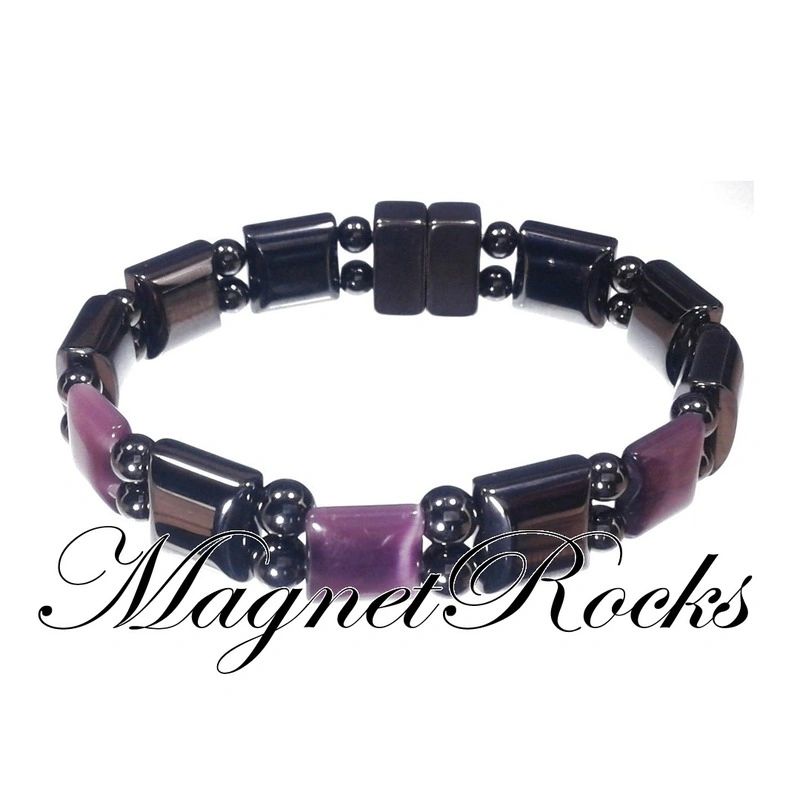
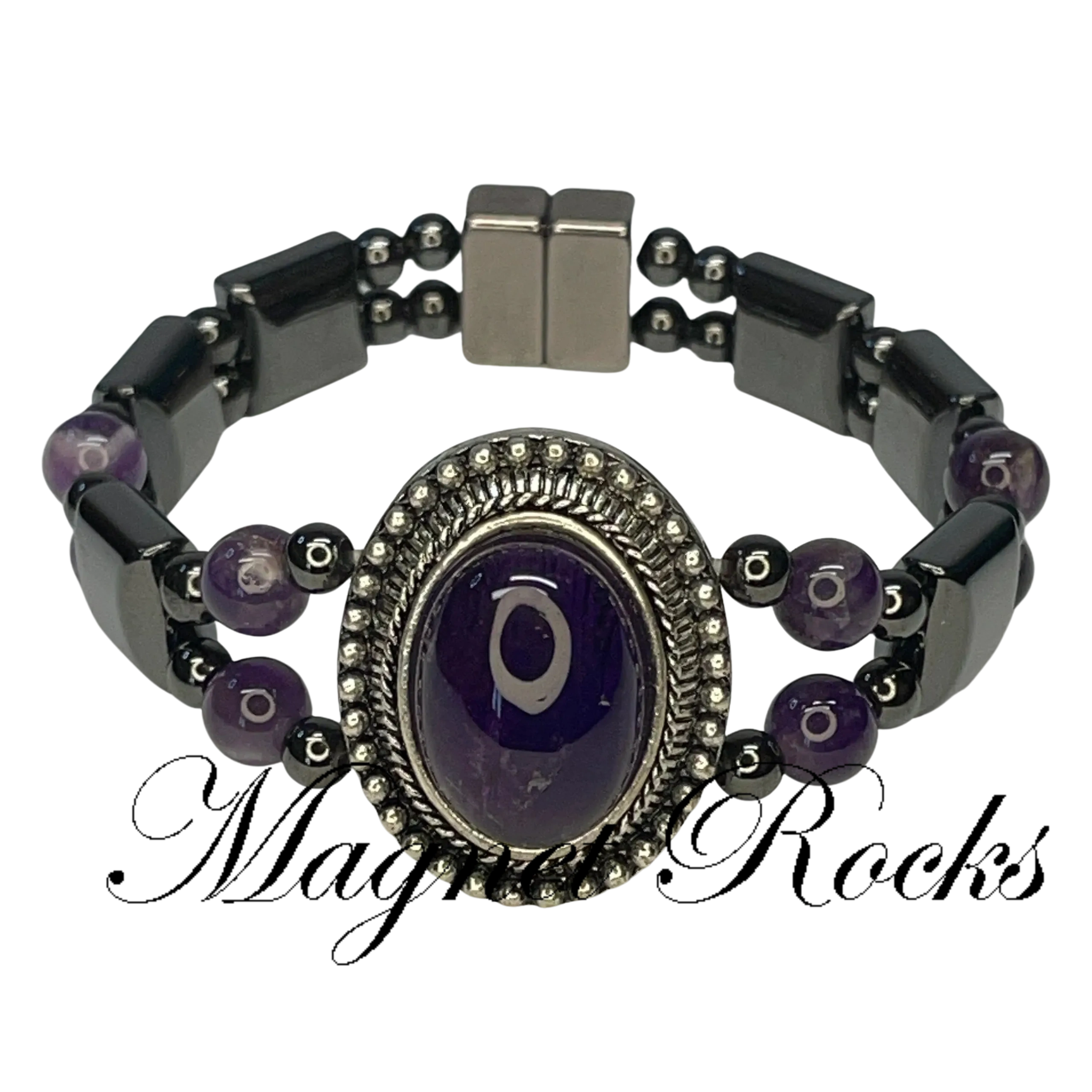
    Ready to add a touch of purple elegance to your life? Explore our hand-made selection of amethyst jewelry – from sparkling February birthstone necklaces and anklets to therapeutic magnetic amethyst bracelets – and find a piece that speaks to your style and spirit. (And don’t miss tomorrow’s Day 3 post, where we reveal how magnetic therapy is paired with these beautiful gems for wellness benefits!)

    Sources: Amethyst gemstone information from GIA gia.edugia.edu and the International Gem Society gemsociety.org; historical myths and lore from Wikipedia and gemological references en.wikipedia.org gemsociety.org; magnetic therapy research and claims summarized from Magnet Rocks “The Science” reference page magnetrocks.net magnetrocks.net and Healthline healthline.com. Each blog post in this 3-day series is based on documented knowledge and aims to provide both insight and practical value. Enjoyed this series? Feel free to share these posts or reach out with your own experiences with amethyst and magnetic jewelry! Stay sparkling and healthy.

    Magnet Rocks – Hematite Magnetic Jewelry | Daytona Beach, FL – Since 2012
  • Amethyst-Day 1: History, Jewelry and Magnetic Mystique

    The Storied History of Amethyst

    Amethyst geodes and clusters have captivated humans for millennia.
    Amethyst is the purple variety of quartz that has enchanted civilizations for thousands of years. The very name amethystos comes from ancient Greek, meaning “not drunken,” reflecting the belief that the stone protected its owner from intoxication en.wikipedia.org. In Greek mythology, amethyst was associated with Dionysus (Bacchus), the god of wine – legend tells that the wine god poured out his wine over a clear stone in remorse, staining it violet and giving us the amethyst gem gemsociety.org gemsociety.org. Ancient Greeks and Romans wore amethyst amulets and even crafted goblets from amethyst, believing wine drunk from an amethyst cup would not lead to drunkenness en.wikipedia.org. This notion of sobriety and clarity also led to amethyst being a symbol of clear-headedness: Greek soldiers carried it into battle for steady focus, and Renaissance Europeans thought it could even calm an overpowered lover’s passion gia.edu.

    Beyond its anti-inebriation lore, amethyst gathered rich spiritual and cultural significance. It was one of the twelve precious stones in the biblical High Priest’s breastplate, and early Christians later associated amethyst with piety and celibacy. By the Middle Ages, amethyst had become known as the “Bishop’s Stone” – Catholic bishops often wore amethyst rings to symbolize their office. (In fact, the violet-purple color was said to represent spiritual wisdom and humility.) Historically, mystics like Camillo Leonardi lauded amethyst for “quickening intelligence and dispelling evil thoughts” gia.edu, attributing to it a purifying, level-headed energy. Throughout the ancient Mediterranean world, from Egypt to Rome, amethyst was prized as a stone of beauty and power mysticlightpress.com. Egyptians carved amethyst into amulets, and Persian and Asian artisans included it in lavish treasures.

    Amethyst’s royal purple hue naturally made it a favorite of monarchs and nobility. It adorned pharaohs and emperors, and later European royalty. At one time, fine amethyst was as rare and expensive as rubies or emeralds – a gem literally worthy of kings gia.edu. Figures like Catherine the Great of Russia (1729–1796) were infamous for their love of amethyst, decking themselves in sumptuous purple gemstones gia.edu. Even into the 20th century, amethyst featured in crown jewels and spectacular pieces; for example, the Duchess of Windsor’s renowned amethyst bib-necklace by Cartier combined large Siberian amethysts with turquoise and diamonds for a truly regal statement gia.edu. Amethyst’s allure transcended wealth alone: its purple color has long symbolized royalty, spirituality, and luxury across many cultures.

    The 19th century brought a twist to amethyst’s story. Huge deposits discovered in Brazil and Uruguay suddenly made amethyst abundantly available. This democratized the gemstone – no longer was it only for the elite. Once “cardinal gem” rare, amethyst became accessible and affordable to common folk gia.edu. Yet its popularity only grew. It remains the birthstone of February, associated with qualities of peace, courage, and stability. (Fittingly, Saint Valentine himself was said to wear an amethyst ring carved with Cupid’s image, perhaps cementing amethyst’s link to love and fidelity gia.edu.) Amethyst is also the traditional gem for 6th and 17th wedding anniversaries, signifying enduring commitment. Today, whether worn for its beauty or its fabled benefits, amethyst carries a rich legacy. From ancient myth to modern metaphysical shops, this vibrant purple quartz stands as a timeless symbol of clarity, protection, and spiritual calm.

    Interested in experiencing the legendary allure of amethyst yourself? Stay tuned for Day 2, where we delve into amethyst’s role in jewelry. If you’re inspired by amethyst’s history, you can also explore our collection of genuine amethyst jewelry to carry a piece of that history with you.

    Sources: Amethyst gemstone information from GIA gia.edugia.edu and the International Gem Society gemsociety.org; historical myths and lore from Wikipedia and gemological references en.wikipedia.org gemsociety.org; magnetic therapy research and claims summarized from Magnet Rocks “The Science” reference page magnetrocks.net magnetrocks.net and Healthline healthline.com. Each blog post in this 3-day series is based on documented knowledge and aims to provide both insight and practical value. Enjoyed this series? Feel free to share these posts or reach out with your own experiences with amethyst and magnetic jewelry! Stay sparkling and healthy.

    Magnet Rocks – Hematite Magnetic Jewelry | Daytona Beach, FL – Since 2012
  • Magnetic Jewelry Care, Safety, and Expert Tips for Long-Term Use

    As we wrap up our week-long journey into hematite magnetic jewelry, it’s fitting to cover a few final but crucial topics: caring for your jewelry, ensuring you use it safely, and some expert tips to get the most out of it. Quality magnetic jewelry (like the pieces from Magnet Rocks) is an investment in your well-being – and like any investment, you’ll want to maintain it. Fortunately, hematite magnetic jewelry is pretty low-maintenance. A little mindful care will keep it looking shiny and new for years. Safety-wise, while magnetic jewelry is generally very safe, there are a few precautions and situations to be aware of. So let’s dive into these practical aspects to conclude our series, empowering you to wear your hematite magnets with confidence and wisdom.

    Proper Care for Your Hematite Magnetic Jewelry

    Taking care of hematite jewelry is much like caring for other fine fashion jewelry, with a couple of magnetic-specific notes:

    • Cleaning: Hematite has a smooth, non-porous surface, so it doesn’t hold dirt easily – but it can collect oils from your skin over time, which might dull its shine. The good news is it’s simple to clean. Use a soft cloth (microfiber or jewelry polishing cloth) to gently wipe the beads and metal clasps. This will remove fingerprints or any slight tarnish on clasps. If a deeper clean is needed, you can use plain water with a tiny drop of mild dish soap. Dampen a cloth with soapy water and wipe the jewelry, then rinse the cloth and wipe again to remove any soap residue. Important: fully dry the jewelry with a lint-free towel after cleaning. While hematite beads themselves won’t rust, the magnetic clasp could be prone to corrosion if left wet. Drying prevents any moisture from sitting on those parts. Avoid harsh chemicals or jewelry cleaners; hematite doesn’t require chemical polishing and some cleaners might even damage any protective coating on clasps or the co-polymer cording inside bracelets. Simple is best.
    • Storage: Because magnetic jewelry sticks to metal, you’ll want to store it a little differently than regular jewelry. If you toss your hematite bracelet into a jewelry box with loose metal chains or watches, it might latch onto them! This isn’t harmful per se, but it can create a tangled mess or potentially scratch softer metal pieces. The best practice is to keep your magnetic pieces in separate sections or in soft pouches. All Magnet Rocks Jewelry comes in a little black velvet bag – use those to your advantage. Keep each magnetic bracelet or necklace in its velvet bag when not in use, or dedicate a section of a jewelry organizer for them. This also has the benefit of preventing multiple magnetic pieces from sticking to each other. If you’ve ever had two magnet bracelets snap together, you know they can form quite a strong bond (hematite magnets can be surprisingly powerful when combined). Constantly yanking them apart isn’t ideal, so separation during storage helps. Also, keep them away from credit cards, key fobs, or other magnet-sensitive items when storing.
    • Handling: Hematite beads are hard and can crack or chip if struck against a very hard surface. Treat your jewelry with a bit of care – for instance, don’t fling a heavy hematite bracelet onto a marble countertop. Basically, normal gentle handling will keep your pieces intact. The magnets will attract ferrous objects (like iron, steel). It can be fun to demonstrate this – say, picking up a paperclip with your bracelet – but be careful around devices. For instance, if you’re working with power tools or machinery, secure or remove loose magnetic jewelry just as you would any jewelry, so it doesn’t get unexpectedly stuck to something.
    • Maintaining Shine: Over months or years, if you notice your hematite looking a little less glossy, you can buff it with a jewelry polishing cloth. Hematite is pretty scratch-resistant, but tiny scratches from regular wear can accumulate. Polishing it will restore the luster by smoothing out microscopic roughness. Some people also lightly coat their hematite beads with a touch of mineral oil to enhance shine – if you try this, apply a minute amount on a cloth and buff well so no oily residue remains (and again, keep away from the clasp if it’s metal, as oil isn’t needed there). However, this step is usually optional; most quality hematite beads stay shiny a long time with just occasional wiping.

    Safety and Precautions

    As beneficial and harmless as magnetic jewelry is for the vast majority, there are a few safety guidelines to keep in mind:

    • Pacemakers and Medical Devices: This is the golden rule – do not use magnetic jewelry if you have an implanted pacemaker, defibrillator, or similar electronic medical device. Magnets can interfere with these life-saving devices by affecting their sensors magnetrocks.net. Even the static magnets in jewelry, although not extremely strong, are close to the body and could potentially alter a pacemaker’s timing if brought within a couple of inches. It’s simply not worth the risk. Pacemaker patients are usually warned to keep magnets at least 6 inches away from their device – that essentially excludes wearing a magnet necklace or brooch over the chest, and bracelets could sometimes come near when arms are crossed, etc. If you or someone you gift a magnetic piece to uses a pacemaker, it’s safest to avoid magnetic jewelry altogether. The same caution goes for insulin pumps or intrathecal pain pumps and certain cochlear implants – check with your doctor if you have any implanted electronics; they will advise on magnets.
    • Pregnancy: There isn’t any conclusive evidence that magnets harm pregnancy – in fact, some pregnant women use magnet therapy for back pain. However, because pregnancy is a delicate time and not as much research exists on magnets in pregnancy, it’s wise to consult with a healthcare provider before using magnetic jewelry extensively if you are pregnant. Most likely it’s fine, but always better to get professional reassurance. And certainly avoid placing very strong magnets directly over the womb area. A hematite bracelet is one thing, a high-powered magnet belt is another.
    • Young Children and Pets: Magnetic hematite beads are small objects that could pose a choking hazard if a bracelet broke or a loose piece was left around. Additionally, if a child (or pet) swallows multiple magnets, it can be extremely dangerous (the magnets can attract through intestinal walls and cause serious injury). So, treat magnetic jewelry with the same caution as any small object around kids: do not let infants or toddlers play with or chew on it, and store it out of reach of curious little hands. If a bracelet ever snaps and beads scatter, pick them up immediately. For pets, cats might be intrigued by a dangling anklet or bracelet – ensure your jewelry is sturdy so it doesn’t become a cat toy. Some pet owners have used magnetic collars for animals, but that’s beyond our scope – still, keep your personal jewelry away from your pet’s mouth.
    • Skin Reactions: Hematite itself is hypoallergenic (being essentially iron oxide ceramic). However, any metal components like clasps or accent beads could contain nickel or other metals if not specified as nickel-free. Magnet Rocks uses quality materials, but if you have a known metal allergy, choose items with minimal metal or ask if components are nickel-free stainless steel. If you ever notice a skin irritation under your jewelry, discontinue use for a few days to see if it clears up. It could be a reaction to metal or just sweat and friction. Often, magnetic bracelets are loose enough and moved enough that they don’t cause rashes the way tight metal watchbands can, but individual sensitivities vary.
    • Using in Water: Can you shower or swim with magnetic jewelry on? Occasional wetting (like washing hands or getting caught in rain) won’t typically harm hematite. However, to preserve any elastic and metal parts, it’s better to remove the jewelry for showering, swimming (especially in chlorinated pools or hot tubs), and sauna use. Chlorine can slowly corrode metal clasps. Hot water and soaps can also degrade the co-polymer cord over time. Not to mention, you don’t want to accidentally lose your bracelet in the ocean or pool if it slides off a wet limb. So make it a habit to take off your bracelet or necklace before extended water exposure. If it does get soaked, just dry it well afterward.
    • Magnet Strength: Hematite magnets are of moderate strength (much weaker than those super-strong neodymium fridge magnets, for example). They won’t cause any bodily harm by their strength alone – you can’t pinch yourself with hematite beads like you could with two big neodymium discs. The field also doesn’t extend more than a few inches. So you don’t need to worry about walking past a computer or credit card and erasing it – you’d literally have to rub the magnetic beads directly and firmly on a magnetic strip to have a chance of affecting it. Still, as a best practice, keep a small distance. When carrying your purse, for example, maybe don’t rest your magnet-clad wrist right on top of your wallet for hours. These are minor precautions to be extra safe; realistically, issues are rare. Modern credit cards are fairly resistant to such low-level magnets, but older hotel key cards or cassette tapes (if anyone uses those anymore) could be sensitive.

    Expert Tips for Maximizing Benefits

    To conclude, here are a few parting tips from experts and long-time magnetic jewelry users to help you get the most out of your pieces:

    • Be Consistent: Magnetic therapy tends to be incremental. Wear your jewelry daily for a few weeks to gauge its effect. Sporadic use (like one day on, three days off) may not give your body enough exposure to notice changes. If you’re aiming for pain relief or better sleep, consistency is your friend. As one expert puts it, “Think of it like a supplement – you wouldn’t expect one vitamin pill to change your life, but a daily vitamin habit might.” The same goes for your magnetic bracelet or necklace.
    • Hydrate and Live Healthy: Magnets are not a standalone magic bullet. Support their action by staying hydrated (better blood flow when well-hydrated), eating well (nutrients for healing), and doing appropriate exercise or therapy for your condition. Magnets often work best as part of a holistic approach. For instance, if you’re wearing a magnetic bracelet for arthritis, also doing hand stretches and perhaps taking natural anti-inflammatories like turmeric could amplify overall benefits. Many magnet users are into holistic wellness, so they combine modalities. There’s no conflict in doing so.
    • Give it Time, but Not Unlimited Time: Within weeks of faithful use, you should have a sense of whether the jewelry is helping you. If you feel nothing by then, try a few adjustments: wear it on the other wrist or ankle (some people find one side of the body responds better), or add an extra piece (like wearing both a necklace and bracelet to increase magnetic coverage). Also ensure the magnets are as close to the problem area as possible – e.g., for knee pain, an anklet or knee wrap with magnets may beat a bracelet in effectiveness. If after adjustments you still don’t notice any benefit, it could be that magnetic therapy just isn’t your remedy for that issue. It does happen, and that’s okay – everyone’s body is different. The good thing is you’ve lost nothing; you still have a beautiful piece of jewelry you can wear anytime. And some users report coming back to magnets later and finding them helpful under different conditions. Pain conditions especially can change over time, so what didn’t work last year might help when the nature of your pain shifts.
    • Don’t Over-Magnetize One Spot: Wearing multiple pieces is fine, but generally you wouldn’t pile, say, five magnetic bracelets on the same wrist all the time. In rare cases, too much magnetism in one area could cause temporary tenderness or overstimulation. Magnets encourage blood flow; too many in one spot might lead to a little swelling in very sensitive individuals. Moderation is key – one or two pieces strategically placed is typically sufficient. More is not always better. If you do wear multiple items, spread them out (both wrists, or wrist+ankle, etc.). Listen to your body; if an area feels slightly sore after adding a third magnet bracelet, remove one. This is uncommon, but worth mentioning.
    • Periodically Check Your Jewelry: Every few months, inspect your bracelet/necklace for any signs of wear. Is the clasp still secure? Magnet Rocks jewelry is built to last and we stand by our products (with warranties and repair services, as you know). If you catch a minor issue early – like a loosening clasp – it can be fixed before there’s any breakage. We’re happy to help with maintenance or repairs. We want you to confidently rely on your jewelry daily, so don’t hesitate to reach out if something needs TLC. A quick tune-up can extend the life of your favorite piece of jewekry indefinitely.

    And lastly, one emotional tip: enjoy the process. Wearing magnetic jewelry is a proactive step you’re taking for your health. Celebrate that! Each time you put on or see your hematite jewelry, let it reinforce a positive mindset – perhaps it reminds you that you’re seeking balance, or it simply gives you hope that you have tools to help yourself. A positive outlook can synergize with any wellness practice. We truly believe that combining the ancient belief in magnetic healing with modern positive thinking and lifestyle creates the best outcomes.

    Thank you for joining us on this week-long exploration. By covering historical insights, scientific perspectives, usage tips, and more, we hope you feel empowered and informed about hematite magnetic jewelry. As always, if you have any questions or want personalized advice, feel free to reach out to Magnet Rocks (stop by our Daytona Beach location or contact us online). We’re here to support you on your wellness journey. Wear your magnetic jewelry in good health – and with a touch of style – and may you enjoy all the benefits it can bring!

    Magnet Rocks – Hematite Magnetic Jewelry | Daytona Beach, FL – Since 2012
  • Style Meets Healing: How to Wear Hematite Magnetic Jewelry Every

    One of the greatest things about hematite magnetic jewelry is how easily it fits into daily life. Unlike a medical device or cumbersome gadget, it looks and feels just like regular jewelry – meaning you can reap wellness benefits while looking stylish. Today’s post is all about the practical side of wearing your magnetic jewelry: style tips, comfort tips, and ways to make it a seamless part of your everyday routine. After all, consistency is key if you want to experience the benefits we discussed yesterday, so you’ll want to wear your jewelry often. Here’s how to do that with flair and ease!

    Choosing the Right Pieces for Your Lifestyle

    Magnetic jewelry comes in many forms – bracelets, necklaces and anklets. The best piece for you is one you’ll feel comfortable wearing regularly. Consider your daily activities and personal style:

    • Magnetic Bracelets: These are by far the most popular and a great starting point. A well-designed hematite magnetic bracelet can be both subtle and elegant. If you work in an office or use your hands a lot, a bracelet won’t get in the way. Magnet Rocks offers various designs, from plain hematite bands to those mixed with colorful gemstone accents. If your style is minimalist, a single-strand of polished hematite beads gives a classy, unisex look. For a bit more flair, you might choose one with Crystal by Swarovski® for sparkle. Bracelets can be stacked too – some people wear two or three on one wrist for a bolder fashion statement (and arguably a stronger magnetic effect due to more magnets). Feel free to mix magnetic bracelets with your regular jewelry as well; hematite’s neutral color pairs nicely with silver or even gold pieces.
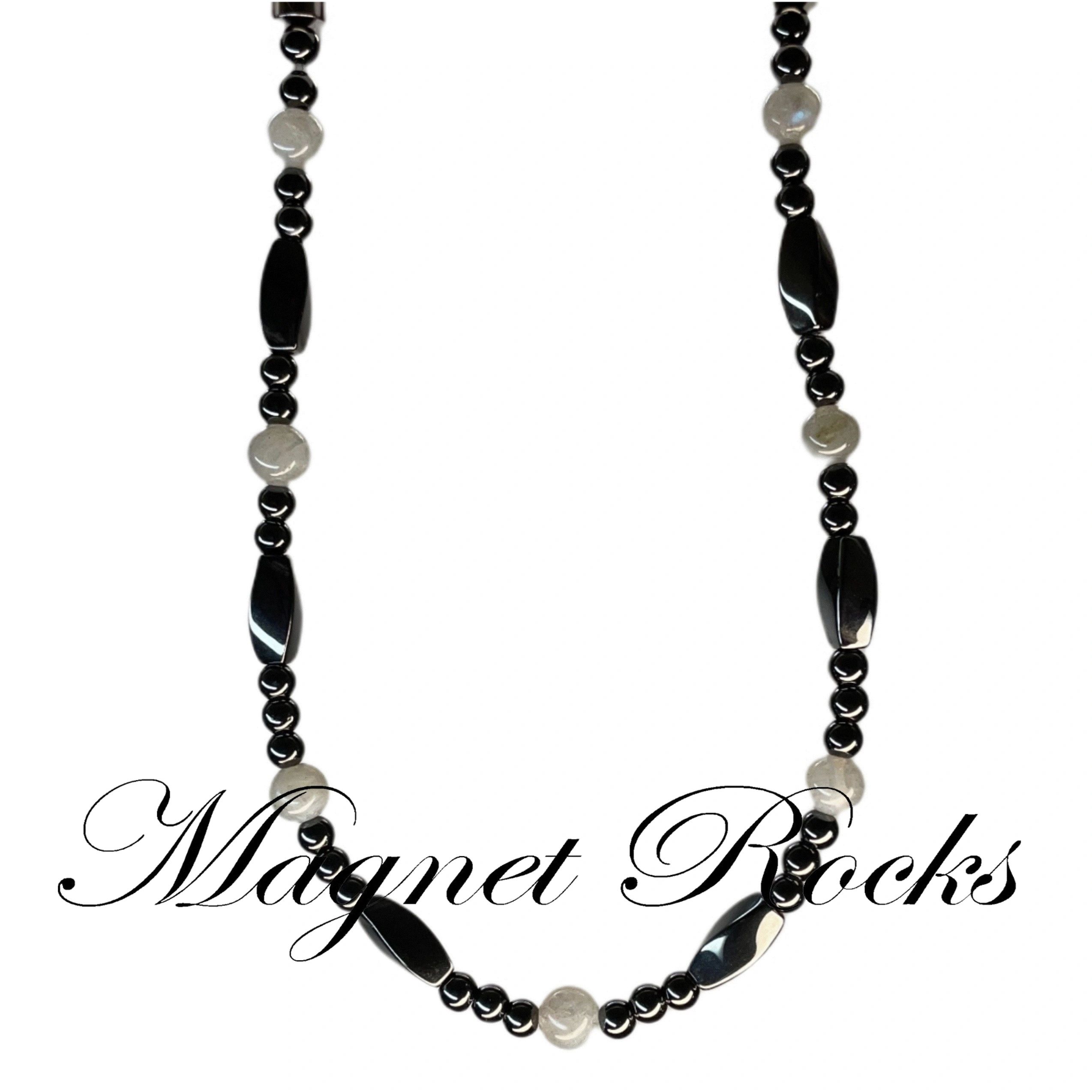
    • Magnetic Necklaces: A hematite magnetic necklace often doubles as a striking accessory. Our 3-in-1 Necklace is made of a Bracelet, Anklet and 3” Extension. If you have upper back or neck tension, wearing a necklace places magnets right in that area. Style-wise, a slender and simple hematite necklaces can be a statement or for everyday wear. A popular choice for women is a hematite necklace interspersed with Pearl or Crystal by Swarovski® – it looks like a chic fashion necklace but has hidden magnetic power. Men often prefer plain hematite or hematite with gemstone accents. All magnetic necklaces feature easy magnetic clasps (the clasp itself is a magnet that snaps together) which makes them very convenient – especially for anyone who struggles with tiny lobster-claw clasps due to arthritis or limited dexterity.
    • Magnetic Anklets: Don’t overlook the anklet! These are fantastic if you deal with leg issues (like neuropathy or restless legs) or if you just like the idea of an invisible helper – since anklets are usually under pants or socks, no one knows you’re wearing one. Style-wise, anklets can be fun: a hematite anklet with gemstones adds personality. Or go for a simple strand that looks like a tiny bracelet around your ankle. Ensure you get the right size; all anklets come in different lengths. One tip: if you wear an ankle monitor or activity tracker, keep it on the opposite leg from your magnetic anklet to avoid any magnetic interference. Otherwise, rock that anklet with sandals in summer or under socks in winter – hematite is durable and can handle daily wear.
    • Other Forms: Magnetic rings and earrings exist too, typically in stainless steel or titanium with magnet inserts. Hematite rings can be magnetic, but solid magnetic hematite rings can be brittle (they may crack if dropped on a hard surface due to the crystalline structure). If you opt for a hematite magnetic ring, handle it with care and maybe take it off before heavy manual work to avoid accidental knocks.

    Integrating Jewelry into Your Daily Wear

    Once you’ve picked pieces you love, wearing them consistently is the next step. Here are some tips to help make magnetic jewelry a habitual part of your life:

    • Make it Part of Your Morning Routine: If you don’t already sleep in your magnetic jewelry. Put your magnetic jewelry on when you dress in the morning, just like you would a watch or pair of earrings. If you’re the forgetful type, keeping it visible can help – for example, place your bracelet on top of your dresser outfit for the day, or hang your necklace on a hook by the mirror. Since magnetic clasps are easy to fasten, it only takes a second. Over time, it becomes second nature to “armor up” with your magnets before stepping out.
    • Coordinate with Your Wardrobe: Hematite’s gray-black tone is truly a neutral, so it rarely clashes. Still, you can use it to your style advantage. Wearing all neutrals or dark colors? A hematite piece will blend in sleekly. Wearing bright colors? Hematite will stand out as a contrasting metallic accent. If you have a particularly dressy event, you might opt for a design that incorporates Crystal by Swarovski® so it looks more like fine jewelry. For casual daily wear (jeans and a t-shirt, athleisure, etc.), a straightforward hematite bead necklace or bracelet adds a touch of polish without looking out of place. Don’t be afraid to layer magnetic jewelry with non-magnetic pieces. For instance, you can stack a magnetic hematite bracelet alongside gold, silver or leather bracelets. It adds depth to the look. The magnets won’t harm a standard watch’s mechanism unless it’s an old mechanical type, and even then the risk is low if a bit of space is maintained. If you notice any odd behavior in a device, just switch wrists – but generally, a small hematite magnet is not strong enough to affect modern electronics at a short distance.
    • Comfort is Key: Ensure your jewelry fits well. A bracelet should be snug enough not to flop around too much (excess movement can both be distracting and cause more wear-and-tear) but not so tight that it’s constrictive or leaves marks. All magnetic bracelets at Magnet Rocks are made in multiple size options to get a good fit. A necklace should not be so heavy that it causes neck strain – hematite is weighty, so very thick necklaces might feel substantial. Our designs use reasonably sized beads that are comfortable; if you find yours a tad heavy, you can wear it for half-days until you get used to the feel. Magnetic clasps on necklaces and bracelets mean no fumbling – a big plus for comfort and ease, especially if you have arthritis in your fingers. You’ll appreciate being able to put on and remove your jewelry without asking for help or straining to work a tiny clasp. This encourages you to wear it more often, which is exactly what we want.
    • Day and Night Wear: Can you wear magnetic jewelry 24/7? Yes, many people do. If you’re comfortable, you can keep it on overnight to continue benefiting (some report the best pain relief or sleep improvement when wearing magnets at night). Hematite won’t tarnish from normal skin contact, and the magnets are permanently magnetized, so there’s no “draining” them by constant wear. However, if you’re a light sleeper, you might not want to wear a necklace to bed as it could feel slightly awkward or get twisted. Bracelets and anklets are usually fine through the night – just be sure they’re not too tight. Simpler designs are ideal for bedtime. Give it a try: for instance, if you usually take your bracelet off, try sleeping with it and see if you notice any difference in how you feel in the morning. Many magnetic jewelry fans insist on round-the-clock wear for maximum effect.
    • Situational Tips: When exercising, you can generally keep your magnetic jewelry on. A lot of athletes wear their magnet bracelets during workouts. Hematite is quite sturdy, and a bit of sweat won’t harm it (just rinse and dry it afterward if needed). If you do high-impact sports, consider whether a bracelet could catch on something or if a necklace might bounce uncomfortably – use your judgment. In those cases, maybe switch to an anklet under a sock, which will stay put and not interfere. At work, magnetic jewelry is usually no issue. One small caution: if you work with sensitive electronic equipment or credit card strips (like if you handle lots of credit cards or work at a cash register), keep the magnets a few inches away from magnetic strips or unshielded storage devices to be safe.

    Making It a Personal Statement

    Your hematite magnetic jewelry can be more than a wellness tool – it can be a signature part of your personal style. Over time, you might find you feel “naked” without your trusty magnetic bracelet or necklace, much like someone would without their wedding band or watch. Embrace that! Choose designs that resonate with you visually and symbolically. Maybe you pick a piece with your birthstone color incorporated, or a bracelet style named “Infinity” or “Unity” because it represents something meaningful to you. Magnet Rocks, for instance, offers collections like Rainbow Hematite for a vibrant look or sets that can convert from necklace to bracelet, which is both cool and practical.

    One customer shared that she treats her magnetic bracelets like mood accessories – black hematite with clear crystals on days she wants to feel serene, rainbow-coated hematite on days she needs an energetic boost. Another gentleman we know wears a simple hematite and tiger’s eye bracelet to the office, which doubles as a conversation starter (people compliment its distinctive look, giving him a chance to explain the benefits of magnetic jewelry – turning him into something of an ambassador for the cause!). In short, wear your magnetic jewelry with confidence and pride. It’s not just about healing; it’s about expressing a lifestyle that values natural wellness and personal balance.

    Combining Style with Benefit – You Can Have Both

    Gone are the days when “therapeutic” accessories looked bland or medical. With hematite magnetic jewelry, you truly get the best of both worlds. You can stack and style them just like any other trending jewelry, all while knowing that each piece is potentially doing your body some good under the radar. It’s a subtle form of self-care that accompanies you through your daily hustle. Plus, taking a moment each day to put on your magnetic jewelry can be a mindful ritual – a reminder to yourself to stay grounded, protected, and proactive about your well-being.

    So go ahead: mix that healing with some fashion! Enjoy the compliments on your jewelry’s appearance, and the private smile you get knowing it’s more than just a pretty piece. Whether you’re in board meetings, out hiking, at a dinner party, or lounging on the couch, your hematite magnetic jewelry can be right there with you, doing its job quietly and stylishly. In our final post tomorrow, we’ll discuss how to care for your jewelry and important safety notes (like who shouldn’t wear magnets). That will ensure your pieces remain beautiful and effective for the long run. Until then, stay stylish and be well!

    Magnet Rocks – Hematite Magnetic Jewelry | Daytona Beach, FL – Since 2012

  • Pain Relief and Beyond: The Benefits of Hematite Magnetic Jewelry

    For many people, the decision to try magnetic jewelry starts with one simple hope – finding relief. Whether it’s a persistent ache in the knee, stiffness in the wrists from typing, or daily stress headaches, hematite magnetic jewelry has been embraced as a natural way to feel better. In this post, we’ll cover the wide range of potential benefits that wearers report, from pain relief for specific conditions to general improvements in wellness. Remember, experiences can vary, but the following are some of the most common reasons people turn to those shiny hematite bracelets and necklaces.

    Common Conditions People Address with Magnetic Jewelry

    One of the remarkable aspects of magnetic therapy is how broadly it’s applied. It’s not targeted to just one ailment – folks with all sorts of conditions give it a try. Here are several conditions and situations where magnetic hematite jewelry is popularly used:

    • Arthritis (Osteoarthritis & Rheumatoid) – Perhaps the number one reason people wear magnetic bracelets. Sufferers of arthritis often experience joint pain, stiffness, and swelling. Magnets are believed to reduce inflammation and improve circulation to the joints, which may ease these symptoms. Some arthritis patients report that a magnetic bracelet noticeably lessens the pain in their hands, wrists, or knees, making daily tasks easier. Clinical research is mixed, but a few studies did find modest pain reductions in osteoarthritis with regular use of magnetic bracelets pmc.ncbi.nlm.nih.gov ebn.bmj.com. Even without scientific certainty, many arthritis sufferers swear by them as part of their pain-management toolkit.
    • Tendonitis and Carpal Tunnel – Repetitive strain injuries like tennis elbow or carpal tunnel syndrome (wrist/forearm pain from nerve compression) are also targeted. Wearing a magnetic bracelet at the site is thought to increase local blood flow and relax surrounding tissues. People who use a computer all day or do manual work sometimes find a magnetic bracelet helps keep flare-ups at bay.
    • Fibromyalgia – This condition causes chronic widespread pain and fatigue, which can be hard to manage. Some fibromyalgia patients try magnetic necklaces or bracelets in hopes of overall pain relief. Anecdotally, there are reports of decreased muscle tenderness and improved energy. A review noted magnets might be beneficial for certain fibromyalgia symptoms beads-n-style.com, though more research is needed.
    • Back Pain and Sciatica – For larger areas like the back, magnetic jewelry (e.g. a hematite necklace for upper back/neck pain, or a belt with magnetic inserts for lower back pain) can be used. The magnets’ effect is more diffuse here. Still, some users feel it helps to wear a magnetic necklace to alleviate neck tension or reduce the frequency of migraines (since neck strain can trigger headaches). In the case of sciatica (pain down the leg from a pinched nerve in the back), magnetic anklets are sometimes worn, aiming to soothe nerve pain in the legs.
    • Poor Circulation and Neuropathy – People with cold hands/feet or mild peripheral neuropathy (often associated with diabetes or other conditions) sometimes wear magnetic anklets or bracelets to spur circulation. By potentially expanding blood vessels and preventing blood from stagnating, magnets might help warm the extremities. Improved blood flow can also nourish nerves, which might ease tingling or numbness in neuropathy beads-n-style.com beads-n-style.com. Again, individual results vary, but there are encouraging stories from users who feel their feet aren’t as cold at night or that numbness has lessened after wearing magnetic anklets regularly.
    • Headaches and Migraines – There’s a history of using magnets for headaches (recall Cleopatra’s magnet on the forehead). Modern magnetic jewelry for this purpose might include a hematite necklace. The idea is to increase blood flow in the head/neck region and calm muscle tension. Interestingly, a specialized magnetic device for migraines (placed on the head to deliver a magnetic pulse) gained FDA approval in 2013 magnetrocks.net, lending some credibility to magnetic approaches for headaches. While a simple necklace is not the same intensity, some migraine sufferers claim wearing one daily reduces their headache frequency. It may tie into stress reduction too (more on that below).

    This list isn’t exhaustive – magnets have also been applied to everything from high blood pressure (the theory being improved blood flow and relaxation might help) to menstrual pain (wearing a magnetic bracelet or belt during the cycle). As with any holistic remedy, your effects may vary. Some individuals feel dramatic improvements, others more subtle changes, and a few none at all. The key point is that many find enough relief to incorporate magnetic jewelry as a consistent part of their therapy.

    Overall Wellness Benefits

    Beyond addressing specific health complaints, hematite magnetic jewelry is often worn for more general wellness and preventive care. Here are some broader benefits enthusiasts associate with wearing their magnets:

    • Better Circulation and Warmth – Even if you don’t have a diagnosed circulation issue, you might notice that the area under a magnetic bracelet stays warmer or that your hands don’t get as cold. Improved micro-circulation can help your body more efficiently deliver nutrients and remove waste products from cells beads-n-style.com. Some athletes wear magnetic bracelets or anklets, believing it helps keep blood flowing during workouts and aids muscle recovery afterward by clearing lactic acid.
    • Reduced Inflammation – Inflammation is a component of many aches and pains, from the soreness after exercise to chronic conditions. Magnetic fields appear to help reduce inflammatory signals in tissues. A lot of users credit their magnetic jewelry with less swelling around old injury sites or joints. For example, if you twist your ankle, wearing a magnetic anklet during recovery might subjectively speed up the healing by curbing excessive inflammation.
    • Faster Healing of Injuries – Building on the above, magnets have been used in clinical settings to speed up bone and tissue repair (particularly via pulsed electromagnetic therapy). For everyday injuries like bruises, sprains, or strains, some people apply magnetic pads or just keep their magnetic bracelet on, claiming that bruises resolve faster or soreness dissipates sooner than expected beads-n-style.com. While anecdotal, it’s a recurring theme in testimonials: “I think I healed faster because of the magnets.”
    • More Energy and Less Fatigue – Chronic pain and poor circulation can both lead to fatigue. By potentially alleviating those, magnetic jewelry wearers often report a bonus effect of higher energy levels. One theory is that with slightly better blood flow, tissues are more oxygenated, so you feel less sluggish. Another angle is that pain can be draining, so if your magnets even marginally reduce pain, your overall vitality improves. Some users also believe magnets help balance the body’s electromagnetic energy, leading to a more energized and balanced feeling throughout the day.
    • Stress Relief and Relaxation – Magnet therapy is sometimes grouped with mindfulness and relaxation techniques. The gentle pressure of a magnetic bracelet and the knowledge that it’s “working” might have a calming psychological effect. Additionally, if magnets do encourage muscle relaxation (some studies on magnetic fields suggest they might relax capillary walls and soft tissues magnetrocks.net), this can translate to a physically calmer state. Many have said that wearing a magnetic necklace helps with tension in their neck and shoulders. Over time, this can reduce stress-related symptoms. There are even magnetic sleep accessories (like magnetic pillows or eye masks) aimed at improving sleep quality. While our focus is jewelry, it’s worth noting that a hematite bracelet worn 24/7 could also contribute to better sleep if it indeed promotes relaxation. In fact, sleep improvement is a frequently cited benefit – people say they fall asleep faster or sleep more soundly with their magnetic jewelry on, which echoes that old Cleopatra anecdote in a modern context!
    • General Wellness & Preventive Care – Some healthy individuals wear magnetic hematite simply because they believe in its holistic support. They feel it keeps their body “in tune” and might prevent minor issues from flaring up. Think of it akin to taking daily vitamins: you’re not treating a specific disease, but you’re trying to maintain optimal well-being. Given magnets are safe and easy to wear, many figure “why not,” and any day they feel a bit more balanced or grounded with their jewelry on is a win.

    Realistic Expectations

    It’s important to approach magnetic jewelry with an open mind but realistic expectations. While there are glowing success stories, it’s not a guaranteed or overnight miracle. Typically, the benefits of magnetic hematite jewelry (if one is going to experience them) accrue over time. In fact, Magnet Rocks customers often ask how long before they notice anything – and the answer can range from immediately to a few days to several weeks of consistent wear. Most feel a difference within 48 hours, especially for things like sleep or hand stiffness, whereas others might need a month to decide if it’s helping. If you try it, be patient and observant of subtle changes. Also, what works for one person’s arthritis might not work for another’s sciatica, and vice versa. Each body is different.

    That said, the benefits outlined above have been reported widely enough that hematite magnetic jewelry continues to enjoy a devoted following. Scientific research is ongoing, and as mentioned in the previous post, some studies do support these benefits (such as magnets aiding arthritis pain or healing in a significant percentage of users) magnetrocks.net. A review of magnetic therapy trials found that a notable portion – roughly 70–80% – of people tested had a positive response magnetrocks.net. Those are pretty encouraging odds! It means that if you’re seeking pain relief or wellness boosts without drugs, giving magnetic jewelry a chance is quite reasonable.

    In conclusion, hematite magnetic jewelry stands at an interesting crossroads of alternative healing and personal wellness. Its potential benefits extend well beyond pain relief, touching on overall quality of life – less pain can mean more activity, better sleep means better mood, improved circulation means a healthier body. While we await more scientific clarity, many users are happily enjoying life “with a little help from their magnets.” And if you find even one of the benefits above rings true for you after wearing your Magnet Rocks jewelry, that’s a success worth celebrating. In our next post, we’ll shift focus to style and practical tips: how to wear and enjoy your magnetic jewelry for maximum benefit (and fashion points!). Until then, stay healthy and hopeful.

    Magnet Rocks – Hematite Magnetic Jewelry | Daytona Beach, FL – Since 2012
  • From Stone to Magnet: The Story of Hematite in Magnetic Jewelry

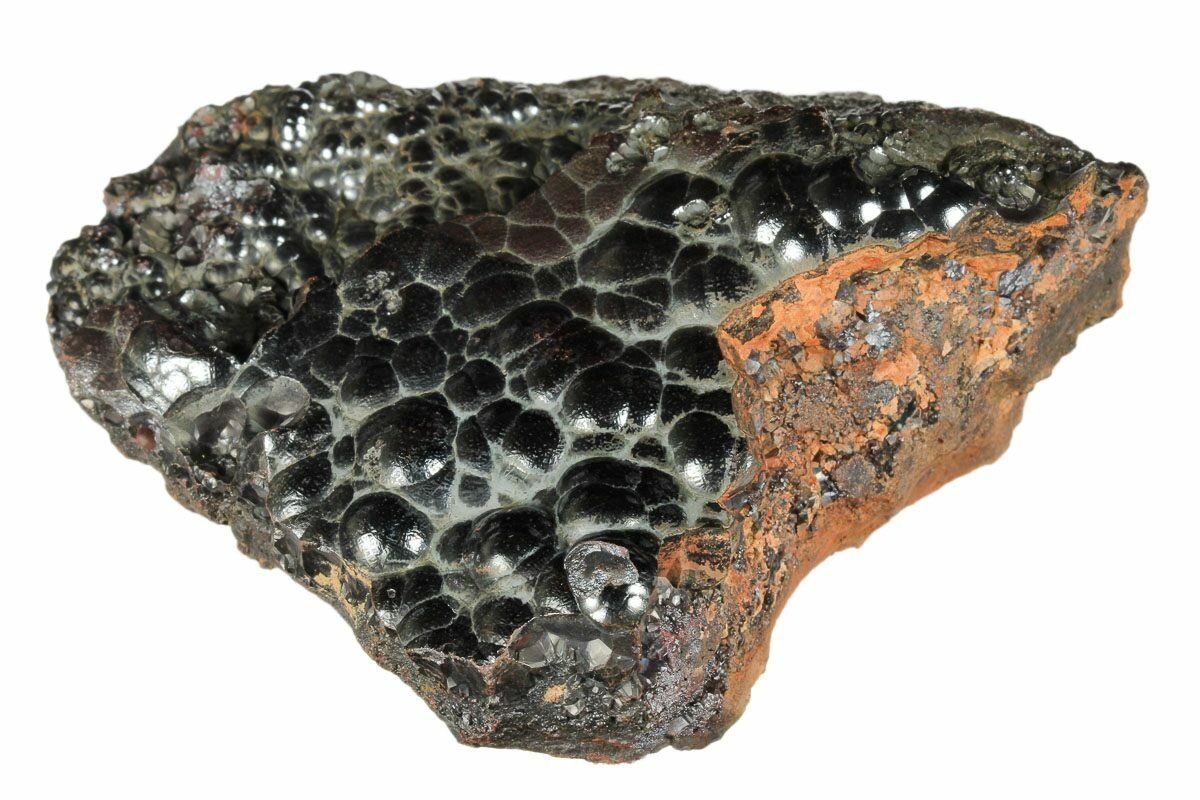
    A botryoidal (“kidney ore”) hematite specimen showing the stone’s typical metallic luster. Hematite’s name comes from the Greek word for blood (haima) because when powdered, it leaves a reddish “blood-like” streak – visible in the rusty patches on this specimen. In its polished form, hematite gleams gunmetal gray, and when magnetized, it becomes the heart of our magnetic jewelry.

    Hematite is the unsung hero of magnetic jewelry – the very material that makes a magnetic bracelet magnetic. But what exactly is hematite, and how does it go from a raw stone in the ground to the shiny magnetic beads on your wrist? In today’s post, we’ll uncover the unique qualities of hematite, including a bit of geology, a dash of mythology, and the modern manufacturing that gives us magnetic hematite. By the end, you’ll appreciate the journey of hematite and why it’s the ideal choice for therapeutic jewelry.

    Meet Hematite: Iron Ore with a Mystical Flair

    Hematite is a mineral form of iron oxide (chemical formula Fe₂O₃) – essentially iron rust in crystalline form. It’s abundant in nature and has been used by humans for millennia, not only for jewelry but also as a pigment (ancient peoples ground it to create red ochre paint). Pure hematite in the ground often appears as dull red or brownish-black rocks. However, when it’s cut and polished, it takes on a brilliant metallic shine, like polished steel or silver. This striking look made hematite popular as a gemstone in ancient Egypt, Greece, and Rome. The Egyptians carved hematite into amulets; the Greeks associated it with the god of war (Ares/Mars) because of its blood-like streak; and Roman soldiers rubbed hematite on their bodies as war paint, believing it would make them invincible and staunch bleeding. Little did they know, hematite actually contains no blood – but it is rich in iron, which is why it has that deep red coloration in powder form.

    In crystal healing lore, hematite is known as a premier grounding stone. It’s said to “keep you rooted” and absorb negative energy, fostering calmness, focus, and courage. Even without magnetic properties, people have long worn hematite for its supposed energetic benefits. It has a weighty, cool feel (due to iron content) that many find soothing. Interestingly, hematite by itself is only very weakly magnetic. A natural hematite stone typically won’t stick to a fridge magnet – in fact, a common science demonstration is that magnetite (a different iron oxide) is strongly magnetic while hematite is not. So how do we get magnetic hematite for our jewelry? That’s where modern science and engineering step in.

    Transforming Hematite into Magnetic Beads

    The hematite used in most magnetic jewelry today is not just chipped off a rock and strung on a bracelet. Instead, it undergoes a special process to become permanently magnetized. Think of it as “hematic alchemy”: we take regular hematite and turn it into a magnetic form. Here’s how it generally works:

    Blending: Finely ground hematite is mixed with other materials – notably magnetite (an iron oxide that is naturally magnetic) and small amounts of metals like nickel, copper, or titanium beads-n-style.com. This creates a composite with the same look and nearly the same chemical makeup as hematite, but with enhanced magnetic potential.

    Heating & Shaping: The mixture is then heated to high temperatures and pressed into the desired shapes (e.g. small round beads, rings, etc.) beads-n-style.com. Essentially, it’s like forming a ceramic – the ingredients fuse together as they cool into a solid piece. In this stage, the beads still aren’t magnetic; they’re just hematite beads in appearance.

    Magnetization: The critical final step is to expose these formed beads to a powerful magnetic field (often using an electromagnetic coil). By reheating and cooling the beads within a strong field, the iron particles inside align their magnetic domains, turning the entire bead into a permanent magnet beads-n-style.com. Natural hematite couldn’t hold this magnetism on its own, but the composite hematite can – it “freezes in” the magnetic alignment once it cools down.

    The result is what we call magnetic hematite. Visually and physically, it’s nearly indistinguishable from pure hematite – same shine, same weight and hardness – but now it reliably sticks to metal and has north/south poles like any magnet. Even experts often have trouble telling natural and magnetic hematite apart without instruments beads-n-style.com. For jewelry lovers and wellness seekers, magnetic hematite is a win-win: you get the beauty of genuine hematite plus consistent magnetic strength for therapeutic use.

    Why Hematite? – Benefits for Jewelry

    Out of all materials, why is hematite (and its magnetic variant) so popular in healing jewelry? Several reasons make it ideal:

    • Aesthetic Appeal: Hematite’s mirror-like gray-black shine complements any outfit. It can look dressy or casual, unisex and timeless. Many men prefer hematite’s sleek look over flashier crystals, for instance, and it pairs well with other gemstones in multi-stone designs.
    • Durability: Magnetic hematite is quite hard (about 5-6 on the Mohs scale) and doesn’t chip or lose magnetism easily. The magnetism is permanent, so you don’t need to “recharge” or replace the magnets – they’ll essentially last forever under normal use beads-n-style.com. This makes for long-lasting jewelry that can be worn daily.
    • Consistent Magnetic Strength: Unlike natural lodestones, which can vary in magnetism, manufactured hematite magnets have a uniform strength throughout each bead beads-n-style.com. This means when you wear a hematite magnetic bracelet, each bead is contributing to an even magnetic field around your wrist. You don’t have to worry that one part of the bracelet is “weaker.” For those wearing it for therapy, that reliability is key.
    • Versatility in Design: Hematite magnets can be made in many shapes and sizes – rounds, ovals, hexagons, even “hematite magnets” shaped like hearts or crosses. They also come in different finishes. For example, rainbow hematite is a variety that has been titanium-coated to display iridescent colors (blue, purple, green sheen on the black surface). It’s popular for those who want a pop of color in addition to the health benefits. Hematite also combines beautifully with other stones: you’ll find magnetic hematite bracelets accented with gems like turquoise, amethyst, or tiger’s eye. These combinations blend the properties (and looks) of multiple stones, which many believe enhances the overall healing effect.

    In short, hematite is the perfect core for magnetic jewelry – it’s as if Mother Nature gave us a foundation (iron ore) and human ingenuity supercharged it (magnetizing it) for our benefit. And let’s not forget the symbolic aspect: iron has always been associated with strength and vitality (think of phrases like “iron will” or the practice of taking iron supplements for energy). Wearing iron in the elegant form of hematite could be seen as a way to carry strength with you. There’s even a saying in crystal circles that hematite “connects us to the Earth” – perhaps a poetic reference to its grounding energy and literal origin in the earth’s crust.

    Next time you put on your hematite magnetic bracelet or necklace, take a moment to appreciate this remarkable journey from stone to magnet. That polished bead on your wrist was once part of a raw red rock hidden underground. Now it’s been refined, magnetized, and fashioned into something that not only looks beautiful but might also support your wellness. It’s a fusion of geology, technology, and holistic tradition – all encapsulated in a small, shiny bead. No wonder hematite holds such a special place in the world of magnetic healing jewelry!

    Magnet Rocks – Hematite Magnetic Jewelry | Daytona Beach, FL – Since 2012