The Storied History of Amethyst
Amethyst geodes and clusters have captivated humans for millennia.
Amethyst is the purple variety of quartz that has enchanted civilizations for thousands of years. The very name amethystos comes from ancient Greek, meaning “not drunken,” reflecting the belief that the stone protected its owner from intoxication en.wikipedia.org. In Greek mythology, amethyst was associated with Dionysus (Bacchus), the god of wine – legend tells that the wine god poured out his wine over a clear stone in remorse, staining it violet and giving us the amethyst gem gemsociety.org gemsociety.org. Ancient Greeks and Romans wore amethyst amulets and even crafted goblets from amethyst, believing wine drunk from an amethyst cup would not lead to drunkenness en.wikipedia.org. This notion of sobriety and clarity also led to amethyst being a symbol of clear-headedness: Greek soldiers carried it into battle for steady focus, and Renaissance Europeans thought it could even calm an overpowered lover’s passion gia.edu.
Beyond its anti-inebriation lore, amethyst gathered rich spiritual and cultural significance. It was one of the twelve precious stones in the biblical High Priest’s breastplate, and early Christians later associated amethyst with piety and celibacy. By the Middle Ages, amethyst had become known as the “Bishop’s Stone” – Catholic bishops often wore amethyst rings to symbolize their office. (In fact, the violet-purple color was said to represent spiritual wisdom and humility.) Historically, mystics like Camillo Leonardi lauded amethyst for “quickening intelligence and dispelling evil thoughts” gia.edu, attributing to it a purifying, level-headed energy. Throughout the ancient Mediterranean world, from Egypt to Rome, amethyst was prized as a stone of beauty and power mysticlightpress.com. Egyptians carved amethyst into amulets, and Persian and Asian artisans included it in lavish treasures.
Amethyst’s royal purple hue naturally made it a favorite of monarchs and nobility. It adorned pharaohs and emperors, and later European royalty. At one time, fine amethyst was as rare and expensive as rubies or emeralds – a gem literally worthy of kings gia.edu. Figures like Catherine the Great of Russia (1729–1796) were infamous for their love of amethyst, decking themselves in sumptuous purple gemstones gia.edu. Even into the 20th century, amethyst featured in crown jewels and spectacular pieces; for example, the Duchess of Windsor’s renowned amethyst bib-necklace by Cartier combined large Siberian amethysts with turquoise and diamonds for a truly regal statement gia.edu. Amethyst’s allure transcended wealth alone: its purple color has long symbolized royalty, spirituality, and luxury across many cultures.
The 19th century brought a twist to amethyst’s story. Huge deposits discovered in Brazil and Uruguay suddenly made amethyst abundantly available. This democratized the gemstone – no longer was it only for the elite. Once “cardinal gem” rare, amethyst became accessible and affordable to common folk gia.edu. Yet its popularity only grew. It remains the birthstone of February, associated with qualities of peace, courage, and stability. (Fittingly, Saint Valentine himself was said to wear an amethyst ring carved with Cupid’s image, perhaps cementing amethyst’s link to love and fidelity gia.edu.) Amethyst is also the traditional gem for 6th and 17th wedding anniversaries, signifying enduring commitment. Today, whether worn for its beauty or its fabled benefits, amethyst carries a rich legacy. From ancient myth to modern metaphysical shops, this vibrant purple quartz stands as a timeless symbol of clarity, protection, and spiritual calm.
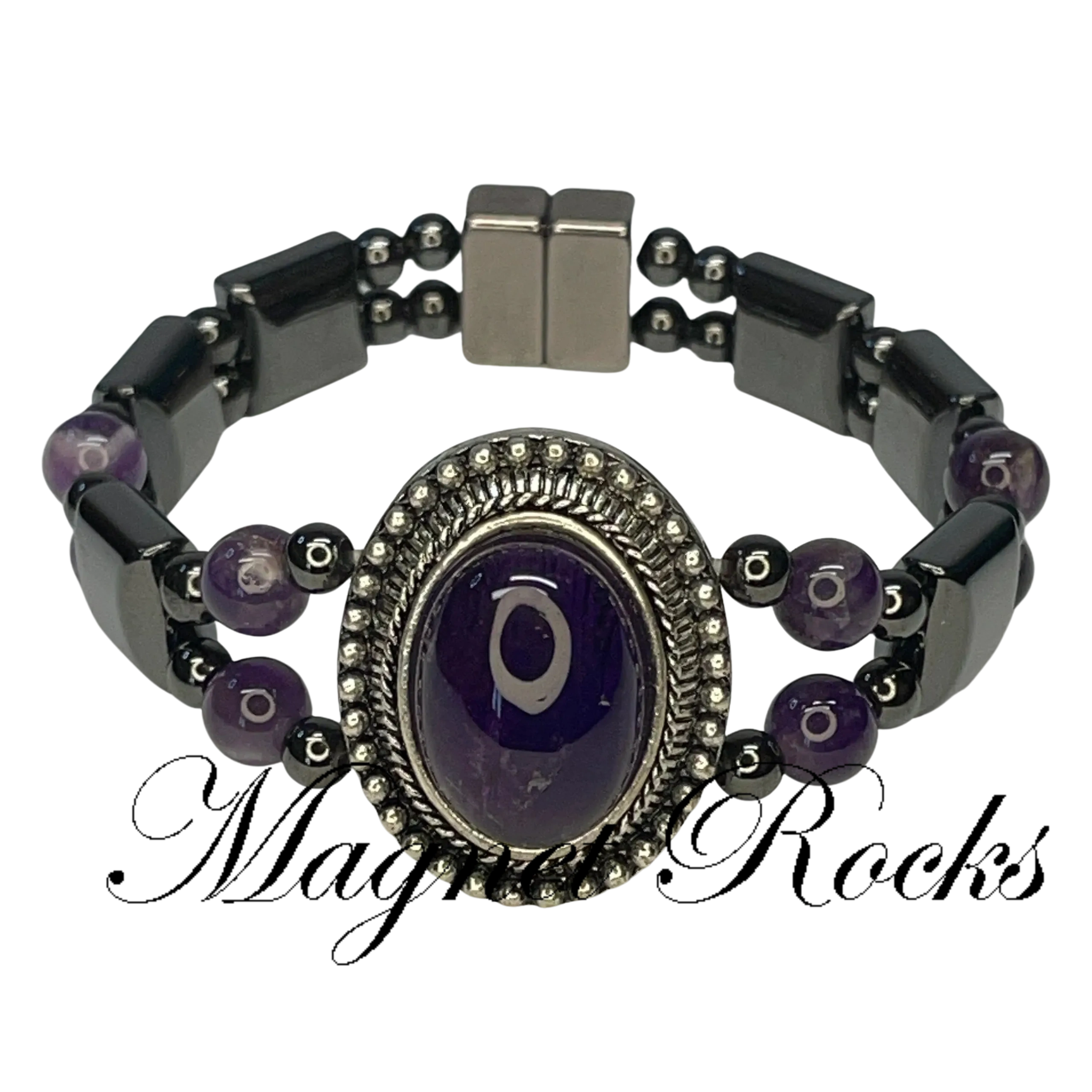
Interested in experiencing the legendary allure of amethyst yourself? Stay tuned for Day 2, where we delve into amethyst’s role in jewelry. If you’re inspired by amethyst’s history, you can also explore our collection of genuine amethyst jewelry to carry a piece of that history with you.
Sources: Amethyst gemstone information from GIA gia.edugia.edu and the International Gem Society gemsociety.org; historical myths and lore from Wikipedia and gemological references en.wikipedia.org gemsociety.org; magnetic therapy research and claims summarized from Magnet Rocks “The Science” reference page magnetrocks.net magnetrocks.net and Healthline healthline.com. Each blog post in this 3-day series is based on documented knowledge and aims to provide both insight and practical value. Enjoyed this series? Feel free to share these posts or reach out with your own experiences with amethyst and magnetic jewelry! Stay sparkling and healthy.
Magnet Rocks – Hematite Magnetic Jewelry | Daytona Beach, FL – Since 2012