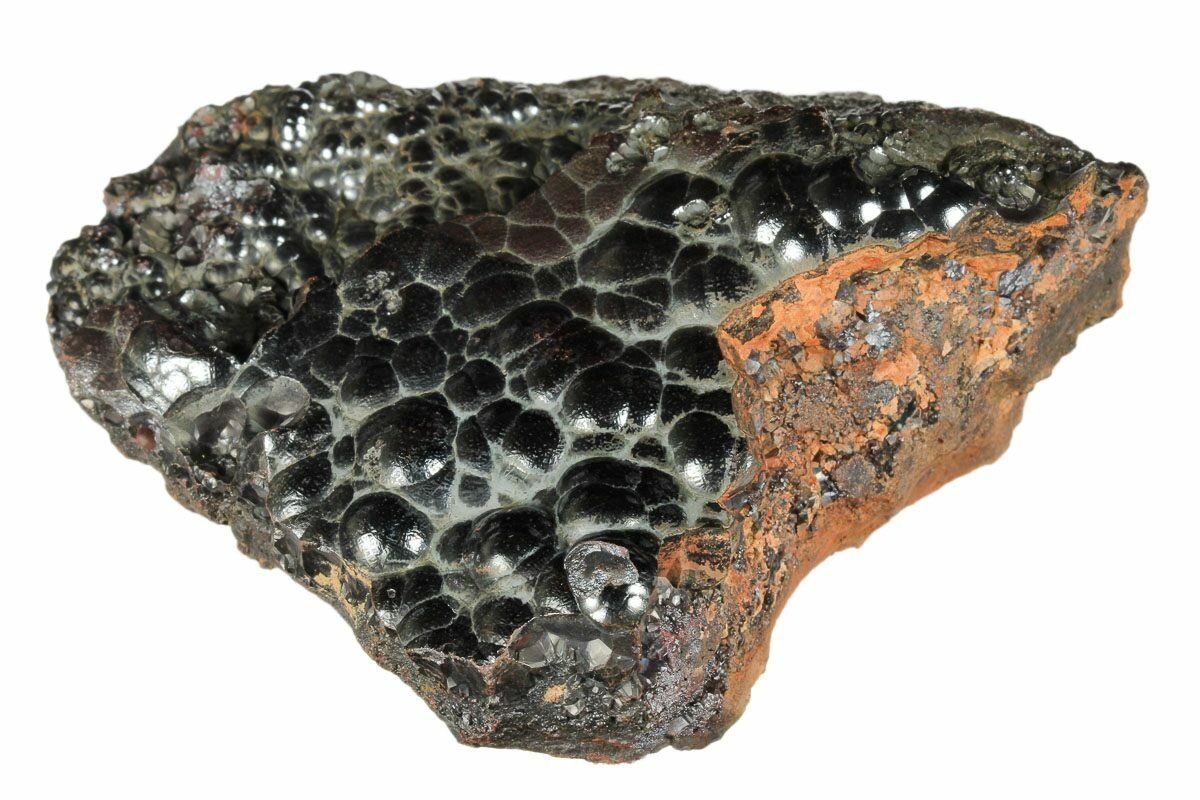
A botryoidal (“kidney ore”) hematite specimen showing the stone’s typical metallic luster. Hematite’s name comes from the Greek word for blood (haima) because when powdered, it leaves a reddish “blood-like” streak – visible in the rusty patches on this specimen. In its polished form, hematite gleams gunmetal gray, and when magnetized, it becomes the heart of our magnetic jewelry.
Hematite is the unsung hero of magnetic jewelry – the very material that makes a magnetic bracelet magnetic. But what exactly is hematite, and how does it go from a raw stone in the ground to the shiny magnetic beads on your wrist? In today’s post, we’ll uncover the unique qualities of hematite, including a bit of geology, a dash of mythology, and the modern manufacturing that gives us magnetic hematite. By the end, you’ll appreciate the journey of hematite and why it’s the ideal choice for therapeutic jewelry.
Meet Hematite: Iron Ore with a Mystical Flair
Hematite is a mineral form of iron oxide (chemical formula Fe₂O₃) – essentially iron rust in crystalline form. It’s abundant in nature and has been used by humans for millennia, not only for jewelry but also as a pigment (ancient peoples ground it to create red ochre paint). Pure hematite in the ground often appears as dull red or brownish-black rocks. However, when it’s cut and polished, it takes on a brilliant metallic shine, like polished steel or silver. This striking look made hematite popular as a gemstone in ancient Egypt, Greece, and Rome. The Egyptians carved hematite into amulets; the Greeks associated it with the god of war (Ares/Mars) because of its blood-like streak; and Roman soldiers rubbed hematite on their bodies as war paint, believing it would make them invincible and staunch bleeding. Little did they know, hematite actually contains no blood – but it is rich in iron, which is why it has that deep red coloration in powder form.
In crystal healing lore, hematite is known as a premier grounding stone. It’s said to “keep you rooted” and absorb negative energy, fostering calmness, focus, and courage. Even without magnetic properties, people have long worn hematite for its supposed energetic benefits. It has a weighty, cool feel (due to iron content) that many find soothing. Interestingly, hematite by itself is only very weakly magnetic. A natural hematite stone typically won’t stick to a fridge magnet – in fact, a common science demonstration is that magnetite (a different iron oxide) is strongly magnetic while hematite is not. So how do we get magnetic hematite for our jewelry? That’s where modern science and engineering step in.
Transforming Hematite into Magnetic Beads
The hematite used in most magnetic jewelry today is not just chipped off a rock and strung on a bracelet. Instead, it undergoes a special process to become permanently magnetized. Think of it as “hematic alchemy”: we take regular hematite and turn it into a magnetic form. Here’s how it generally works:
Blending: Finely ground hematite is mixed with other materials – notably magnetite (an iron oxide that is naturally magnetic) and small amounts of metals like nickel, copper, or titanium beads-n-style.com. This creates a composite with the same look and nearly the same chemical makeup as hematite, but with enhanced magnetic potential.
Heating & Shaping: The mixture is then heated to high temperatures and pressed into the desired shapes (e.g. small round beads, rings, etc.) beads-n-style.com. Essentially, it’s like forming a ceramic – the ingredients fuse together as they cool into a solid piece. In this stage, the beads still aren’t magnetic; they’re just hematite beads in appearance.
Magnetization: The critical final step is to expose these formed beads to a powerful magnetic field (often using an electromagnetic coil). By reheating and cooling the beads within a strong field, the iron particles inside align their magnetic domains, turning the entire bead into a permanent magnet beads-n-style.com. Natural hematite couldn’t hold this magnetism on its own, but the composite hematite can – it “freezes in” the magnetic alignment once it cools down.
The result is what we call magnetic hematite. Visually and physically, it’s nearly indistinguishable from pure hematite – same shine, same weight and hardness – but now it reliably sticks to metal and has north/south poles like any magnet. Even experts often have trouble telling natural and magnetic hematite apart without instruments beads-n-style.com. For jewelry lovers and wellness seekers, magnetic hematite is a win-win: you get the beauty of genuine hematite plus consistent magnetic strength for therapeutic use.
Why Hematite? – Benefits for Jewelry
Out of all materials, why is hematite (and its magnetic variant) so popular in healing jewelry? Several reasons make it ideal:
- Aesthetic Appeal: Hematite’s mirror-like gray-black shine complements any outfit. It can look dressy or casual, unisex and timeless. Many men prefer hematite’s sleek look over flashier crystals, for instance, and it pairs well with other gemstones in multi-stone designs.
- Durability: Magnetic hematite is quite hard (about 5-6 on the Mohs scale) and doesn’t chip or lose magnetism easily. The magnetism is permanent, so you don’t need to “recharge” or replace the magnets – they’ll essentially last forever under normal use beads-n-style.com. This makes for long-lasting jewelry that can be worn daily.
- Consistent Magnetic Strength: Unlike natural lodestones, which can vary in magnetism, manufactured hematite magnets have a uniform strength throughout each bead beads-n-style.com. This means when you wear a hematite magnetic bracelet, each bead is contributing to an even magnetic field around your wrist. You don’t have to worry that one part of the bracelet is “weaker.” For those wearing it for therapy, that reliability is key.
- Versatility in Design: Hematite magnets can be made in many shapes and sizes – rounds, ovals, hexagons, even “hematite magnets” shaped like hearts or crosses. They also come in different finishes. For example, rainbow hematite is a variety that has been titanium-coated to display iridescent colors (blue, purple, green sheen on the black surface). It’s popular for those who want a pop of color in addition to the health benefits. Hematite also combines beautifully with other stones: you’ll find magnetic hematite bracelets accented with gems like turquoise, amethyst, or tiger’s eye. These combinations blend the properties (and looks) of multiple stones, which many believe enhances the overall healing effect.
In short, hematite is the perfect core for magnetic jewelry – it’s as if Mother Nature gave us a foundation (iron ore) and human ingenuity supercharged it (magnetizing it) for our benefit. And let’s not forget the symbolic aspect: iron has always been associated with strength and vitality (think of phrases like “iron will” or the practice of taking iron supplements for energy). Wearing iron in the elegant form of hematite could be seen as a way to carry strength with you. There’s even a saying in crystal circles that hematite “connects us to the Earth” – perhaps a poetic reference to its grounding energy and literal origin in the earth’s crust.
Next time you put on your hematite magnetic bracelet or necklace, take a moment to appreciate this remarkable journey from stone to magnet. That polished bead on your wrist was once part of a raw red rock hidden underground. Now it’s been refined, magnetized, and fashioned into something that not only looks beautiful but might also support your wellness. It’s a fusion of geology, technology, and holistic tradition – all encapsulated in a small, shiny bead. No wonder hematite holds such a special place in the world of magnetic healing jewelry!
Magnet Rocks – Hematite Magnetic Jewelry | Daytona Beach, FL – Since 2012