Blog

  • When Ordinary People Begin To Resist

    Frustration Became Public

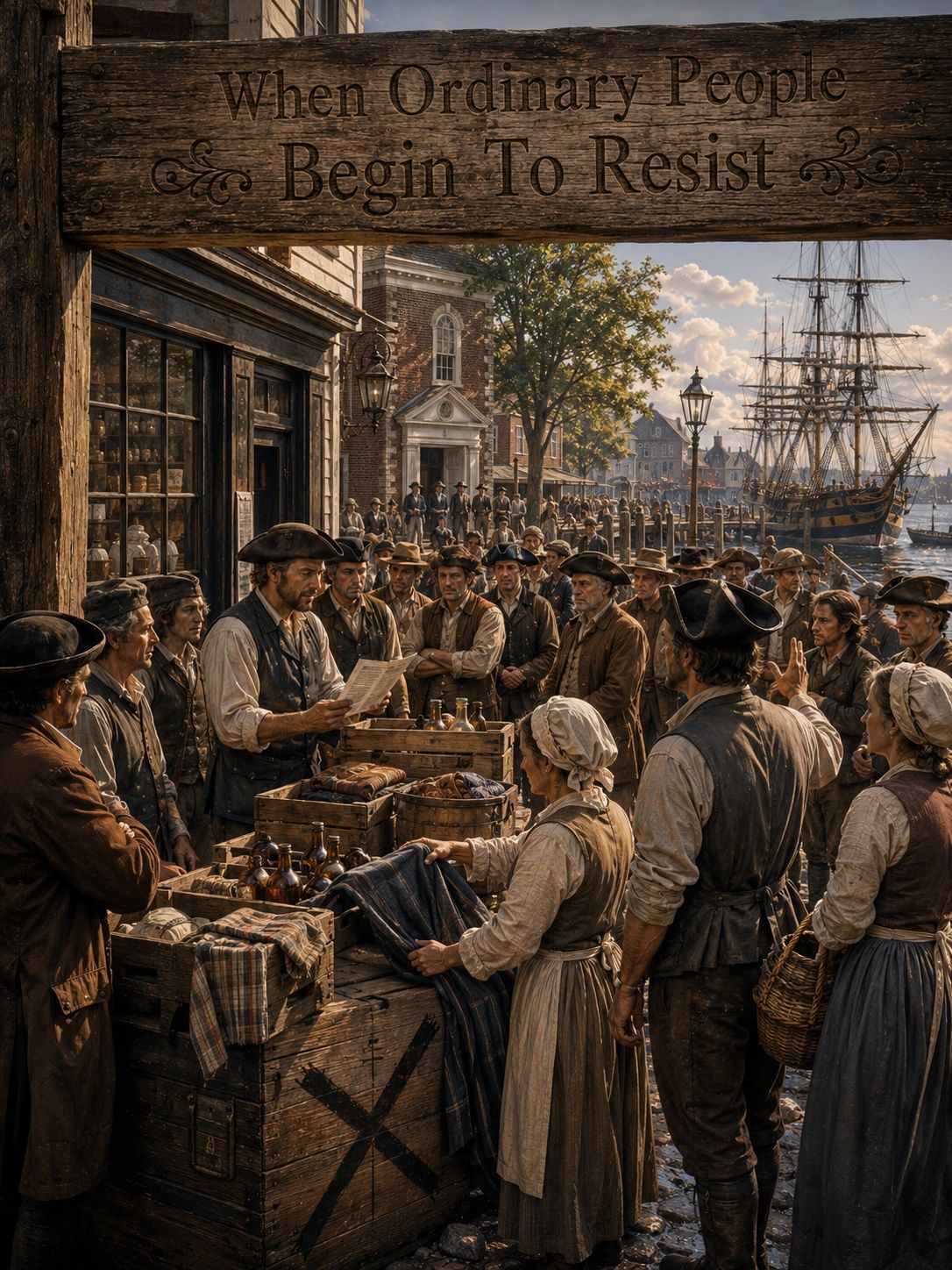
    Frustration did not remain hidden forever. What had begun as private concern around tables, docks, shops, farms, and meeting places slowly became public. Anger spread through towns and ports as colonists discussed taxation, trade restrictions, representation, and the growing feeling that decisions made far away were reaching too deeply into their daily lives. This was not only a matter for wealthy leaders or polished speakers.

    Merchants felt pressure in trade. Dockworkers felt it in the flow of goods. Farmers felt it in markets and costs. Craftsmen felt it in materials and business. Families felt it in the price of ordinary life.

    The cost of distant rule was becoming visible in practical ways, and practical hardship has a way of turning quiet concern into public conversation. Resistance began moving from thought into action.

    People who may once have complained privately began speaking more openly. Communities began asking what could be done. The feeling spread that accepting every burden without protest would only invite more control.

    Ordinary people were beginning to understand that silence itself could become a kind of surrender.

    Boycotts And Protest

    Boycotts became one of the first powerful tools of colonial resistance.

    By refusing certain British goods, colonists found a way to resist without immediately turning to violence. They could use buying, selling, trading, and refusing as a form of public speech. Economic resistance allowed people to participate in a struggle that was still taking shape. This mattered because resistance became practical.

    A merchant could refuse goods. A shopkeeper could make a choice. A family could do without certain items. A community could agree to support local alternatives. What people purchased, used, wore, drank, or refused became connected to larger questions of liberty and responsibility. Boycotts also required sacrifice.

    Refusing imported goods was not always convenient. It could be costly. It could create tension. It required discipline and trust. People had to believe that their private choices mattered because those choices were part of something larger.

    Resistance was teaching the colonies that freedom was not only spoken about in public meetings.

    It had to be practiced in daily life.

    The Power Of Shared Ideas

    Ideas spread quickly when people were ready to hear them.

    Newspapers, pamphlets, letters, sermons, tavern conversations, and meetinghouse discussions helped connect separate frustrations into a shared understanding. A complaint in one town could become known in another. A printed argument could travel farther than a single voice. A story of resistance in one colony could encourage people elsewhere.

    That was powerful.

    Many people who felt frustrated may have first believed their concerns were local or isolated. But as information spread, colonists began realizing they were not alone. Others were asking the same questions. Others were feeling the same pressure. Others were wondering whether distant authority had gone too far.

    Shared ideas helped create shared identity.

    The colonies still differed in region, economy, religion, and habit, but printed words and public discussion helped build emotional connection. People who had never met could begin to recognize themselves in one another’s concerns.

    Before unity becomes political, it often becomes emotional.

    People begin to feel that someone else’s burden is connected to their own.

    Ordinary Citizens Stepped Forward

    History is often told through famous names, but history is not carried by famous names alone.

    Ordinary citizens stepped forward in ways large and small. Blacksmiths, dockworkers, merchants, farmers, mothers, printers, ministers, shopkeepers, apprentices, sailors, and laborers all became part of the growing resistance. Some spoke publicly. Some organized. Some printed. Some refused goods. Some supported neighbors. Some taught their children what was happening.

    That is one of the great truths of this chapter.

    Resistance became real when ordinary people began participating.

    They did not all participate in the same way. They did not all agree on everything. They did not all understand the future clearly. But more and more people began to feel that responsibility for the future was becoming personal.

    A mother managing a household during a boycott was part of the story. A printer risking criticism by circulating arguments was part of the story. A merchant choosing principle over profit was part of the story. A worker listening in a tavern and carrying the conversation home was part of the story.

    History was beginning to move through common hands.

    Fear And Courage Existed Together

    Even as resistance grew, fear remained.

    Many colonists still feared conflict with England. That fear was reasonable. England was powerful. The empire had ships, soldiers, laws, money, and authority. Open resistance could bring punishment, financial loss, social division, or worse.

    Not everyone wanted confrontation. Not everyone believed the same path should be taken.

    Courage did not erase that uncertainty.

    Courage often grows while uncertainty remains. Some colonists believed freedom required sacrifice, but they could not know how much sacrifice would eventually be demanded. Others hoped tensions could still be resolved. Families worried about consequences. Communities debated what was wise.

    Hope and anxiety walked side by side.

    That tension makes the story more human. These were not people moving through history with perfect knowledge. They did not know the ending. They had to choose while the future was unclear.

    They had to decide whether small acts of resistance were worth the risk.

    That is where courage often begins: not with certainty, but with the decision to act responsibly despite fear.

    Unity Slowly Emerged

    Unity did not appear all at once.

    The colonies still differed in many ways. Northern ports, southern farms, frontier settlements, coastal towns, merchants, laborers, religious communities, and local governments did not all share the same daily life. Regional differences remained real, and local priorities still mattered.

    But shared frustration began creating shared identity.

    The more colonists talked, printed, protested, refused, and organized, the more they began seeing themselves as connected. A tax in one place, a restriction in another, a protest in one town, and a boycott in another began forming a larger pattern.

    People began to understand that the problem was not only local inconvenience.

    It was a question of authority, consent, responsibility, and future freedom.

    A new sense of purpose was forming slowly. It was fragile, imperfect, and uneven, but it was real. Colonists were beginning to think not only as separate communities, but as people facing a shared question:

    What should be done when a distant power demands obedience without truly listening?

    Why This Matters Today

    Human nature never changes as much as we imagine.

    People desire dignity and fairness. Communities become stronger when individuals participate. Courage often begins with small actions. History changes when ordinary people stop believing they are powerless.

    That truth still matters.

    Freedom survives through participation. Strong societies depend on informed and engaged citizens. Ordinary people shape the future more than they realize, not only through dramatic moments, but through daily choices, conversations, sacrifices, responsibilities, and willingness to stand for what they believe is right.

    Future generations inherit the courage or complacency of those who came before them.

    That is a serious inheritance.

    A people can receive freedom and still fail to understand what preserves it. They can enjoy comfort and forget the discipline that built it. They can speak of rights while neglecting responsibility.

    Remembering ordinary resistance helps us understand that liberty is not maintained by spectators. It is preserved by people willing to participate.

    When citizens began to resist, the relationship between England and the colonies changed.

    Resistance gave frustration a public shape. Boycotts, pamphlets, meetings, sermons, conversations, and organized action helped turn scattered anger into shared purpose.

    But public resistance also raised the stakes.

    British authority would not simply disappear because colonists objected. As resistance grew louder, authority tightened. As authority tightened, colonial anger deepened. The relationship between England and the colonies began approaching a breaking point.

    The road toward revolution was becoming harder to ignore.

    What began as frustration over distant rule was becoming a test of courage, unity, discipline, and conviction. Ordinary people were stepping into history, not because they knew exactly what would happen, but because they were beginning to believe that the future required their participation.
  • The Cost Of Being Ruled From Afar

    England Wanted Greater Control

    As the colonies grew, they became more valuable to England.

    What had once been fragile settlements scattered across a difficult continent were now producing trade, resources, labor, crops, ships, markets, and wealth. From England’s point of view, the colonies were part of a larger empire. They were expected to serve imperial interests, obey imperial rules, and remain loyal to authority across the Atlantic.

    That view made sense to those who saw the world through the structure of empire.

    The Crown and Parliament saw trade, taxation, resources, and obedience as natural parts of colonial life. Colonies were not meant to exist entirely for themselves. They were expected to strengthen the nation that claimed them.

    But the people living in the colonies were not experiencing life as an idea on a map.

    They were building homes, raising families, repairing roads, running shops, farming land, loading ships, burying loved ones, and solving problems with their own hands. England saw assets, trade, and authority. Colonists increasingly saw homes, labor, communities, and futures.

    The Colonists Saw Life Differently

    Many colonists had lived independently for generations.

    They had crossed an ocean, endured hardship, built settlements, raised families, formed local governments, defended communities, and learned to survive through cooperation and responsibility. Their daily lives had trained them to think locally and practically. They knew the soil, the weather, the ports, the roads, the dangers, and the needs of their own communities.

    That experience created a different mindset.

    A law made in England could sound reasonable to men who had never walked colonial roads, faced colonial winters, loaded colonial ships, or tried to manage life in distant settlements. But to those living under those laws, distant control could feel blind to reality.

    The question was not only whether England had power.

    The question was whether power so far away could truly understand the lives it governed.

    Self-reliance had become part of colonial identity. People who had spent generations handling local problems did not easily accept that every important decision should come from across the ocean.

    They still had ties to England, but their daily experience was teaching them that responsibility and voice belonged together.

    Taxes And Restrictions

    New taxes and trade restrictions sharpened that tension.

    Colonists saw money, goods, labor, and commerce affected by decisions made far from their towns and ports. Merchants felt it in trade. Farmers felt it in markets. Craftsmen felt it in costs. Families felt it in the price of daily life.

    What might have looked like policy in London became personal in the colonies.

    Taxes were not only about coins changing hands. They became symbols of authority. A tax carried a message: someone else has the power to reach into your labor and take from it.

    That can be accepted when people believe the system is fair, when they believe they have a voice, and when they believe the burden serves a shared purpose. But when people feel unheard, even a smaller burden can begin to feel like a warning. Trade rules carried the same weight.

    Restrictions could limit where goods were sold, what could be imported, how business could be done, and whose interests were protected first. Colonists increasingly asked why their work, risk, and daily life should be governed by people who did not fully know their circumstances.

    The Question Of Representation

    The question of representation grew from that frustration.

    Many colonists believed people should have a voice in laws affecting them. They were not merely arguing about money. They were asking a deeper question about dignity, consent, and self-government: how can distant rulers understand our daily lives if we are not truly heard?

    That question has power because it reaches beyond one moment in history.

    Human beings want a voice in their own future. They want to know that decisions affecting their homes, labor, children, communities, and rights are not made without them. When people are expected to obey but not participate, resentment grows. When they are asked to sacrifice but not be heard, trust begins to break.

    For many colonists, representation became the line between lawful authority and distant control.

    They were not all ready for independence, and many still considered themselves loyal subjects. But loyalty was becoming strained by the feeling that obedience was being demanded without proper voice.

    Taverns, Churches, And Gathering Places

    Political change often begins in ordinary places.

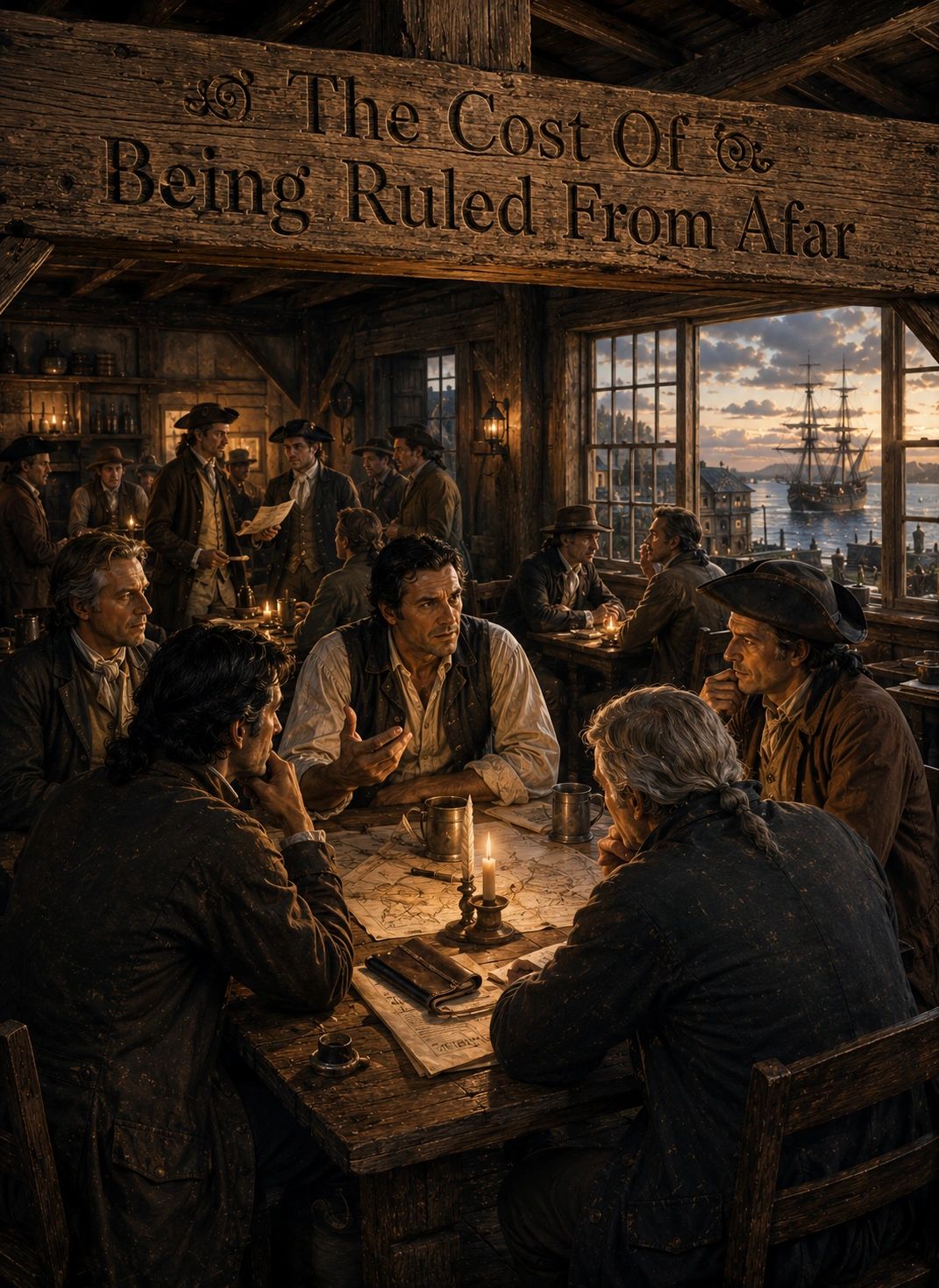
    Taverns, churches, meetinghouses, workshops, homes, docks, and town squares became places where people talked, argued, listened, and questioned. Ideas moved through conversation. Newspapers and pamphlets spread information. Sermons, letters, and public meetings helped ordinary people connect local frustration to larger principles.

    That is important because history is not only made in capitals and battlefields.

    It is made when ordinary people begin talking differently about their lives. A merchant worried about trade. A farmer worried about taxes. A craftsman worried about cost. A minister spoke about conscience. A town meeting discussed rights. A neighbor repeated what he had read.

    Slowly, scattered complaints became shared concern.

    Public discussion became part of colonial culture. People learned to weigh arguments, question authority, defend local interests, and imagine themselves as participants in public life. The more they discussed the cost of distant rule, the more they began to understand that freedom required more than private independence.

    It required public responsibility.

    People want dignity. They want fairness. They want a voice in their future. They want their labor to matter. They want authority to be connected to responsibility. They want to believe that those who make decisions understand the people who must live under them.

    Freedom and responsibility naturally grow together.

    A community that wants liberty must also learn to participate. It must stay informed. It must discuss, debate, listen, serve, sacrifice, and care about consequences beyond the present moment. Self-government is not only a political structure. It is a habit of mind and character.

    That is why major historical changes often begin with ordinary conversations.

    Before a crowd gathers, before a protest forms, before a declaration is written, people talk. They ask whether what they are experiencing is right. They compare burdens. They remember older promises. They teach one another the language of rights, duty, consent, and responsibility.

    Why This Matters Today

    The cost of being ruled from afar still speaks to modern readers because freedom always depends on participation.

    Self-government only survives when people stay informed, responsible, and engaged. A society weakens when people inherit liberty but no longer understand the work required to preserve it.

    Strong societies require both liberty and responsibility.

    Liberty without responsibility becomes selfishness. Responsibility without liberty becomes control. The American struggle would eventually force colonists to wrestle with both. They wanted freedom, but freedom would demand courage, sacrifice, wisdom, discipline, and a willingness to carry consequences.

    Future generations inherit the results of what previous generations defend or ignore.

    That is why remembering matters.

    The colonists were not perfect, and their world contained deep contradictions. But the questions they wrestled with still matter: Who should have a voice? What makes authority legitimate? What does freedom require? What happens when people feel unheard by those who govern them?

    The desire for self-government did not begin with gunfire.

    It began with distance, frustration, debate, and the growing belief that people should have a voice in laws affecting their lives. The colonies were still tied to England, but the emotional bond was weakening.

    The idea of being governed from across an ocean no longer felt natural to many people who had built lives through local effort and responsibility.

    Soon resistance would become more visible. Protests, boycotts, pamphlets, public anger, and organized opposition would spread through the colonies. The road toward revolution would become harder to ignore.

    But before resistance became action, it had to become conviction.

    Ordinary people first had to believe that the cost of being ruled from afar was becoming too great for a free people to accept.

  • The First Cracks In The Crown

    Distance Changed Everything

    The colonies were an ocean away from England, and that distance changed more than travel.

    It changed daily life, habits, expectations, and eventually the way people thought about authority. Messages took weeks or months to cross the Atlantic. Decisions made in London could feel far removed from the realities of colonial life. Problems needing immediate attention could not always wait for distant instruction.

    Because of that, colonists increasingly handled many matters themselves.

    Communities learned to solve local problems, settle disputes, organize labor, defend their interests, and make practical decisions close to home. What began as necessity slowly became habit. And habit slowly became identity.

    Long before revolution was openly discussed, self-reliance had already begun shaping the colonial mind.

    Distance also created a quiet psychological change. A king could still rule from across the ocean, and Parliament could still pass laws, but daily survival was happening in fields, ports, workshops, churches, homes, and meetinghouses far from London.

    The farther people lived from the center of power, the more they learned to depend on judgment formed by experience rather than commands sent from afar.

    A Different Life Was Emerging

    Life in the colonies was producing something different from the world many Europeans had known.

    Colonists worked land, built local communities, governed town affairs, traded with neighbors, defended settlements, and relied on one another in practical ways. Survival rewarded initiative, adaptability, and personal responsibility. In many places, ordinary people experienced forms of local participation and independence that many people in Europe rarely knew.

    That did not mean colonial life was easy or fair for everyone.

    Hardship remained constant. Labor remained demanding. Many people still lived under deep inequality, and some were denied freedom altogether. But even with those contradictions, colonial life was shaping a population more accustomed to local effort and local decision-making than distant dependence.

    A person living in a colonial town or settlement could see the connection between responsibility and outcome.

    A road improved because local people worked on it. A church or meetinghouse stood because neighbors built and supported it. A dispute might be settled by men known in the community. A danger might be answered by those who lived close enough to understand it.

    This did not create independence overnight, but it trained people to think in terms of local duty, local voice, and local consequence.

    The Crown Still Expected Control

    England still viewed the colonies as part of the empire.

    From the Crown’s point of view, the colonies were not separate political experiments. They were extensions of British authority, British trade, and British interest. Laws, taxes, trade restrictions, and imperial expectations continued to come from far away.

    But distance has a way of exposing tension.

    Many colonists began questioning whether rulers across an ocean truly understood the realities of colonial life. How could men in England fully grasp the land, labor, danger, weather, trade conditions, and practical needs of people living in towns, ports, farms, and settlements so far away?

    The more colonists handled life for themselves, the more natural it became to wonder whether outside control always deserved unquestioned obedience.

    At first, these questions did not have to sound like rebellion. They could sound like frustration, confusion, or practical complaint. A tax might seem unfair. A trade rule might seem disconnected from reality. A decision made in England might ignore colonial hardship.

    But beneath those complaints, a deeper question was beginning to form: who truly understood the life being governed, those who lived it or those who ruled it from a distance?

    The Seeds Of Independence

    The first steps toward independence often begin quietly.

    They begin before slogans, before protests, before battle, and before famous declarations. In the colonies, those early steps appeared in local assemblies, community meetings, church discussions, town decisions, and the growing belief that people had a right to a voice in matters affecting their lives.

    Communities discussed rights, representation, taxation, trade, and responsibility.

    Ordinary people were not yet necessarily calling themselves revolutionaries, but they were beginning to think differently than many Europeans. They were learning that self-government was not only an idea. It was a lived habit. When people solve problems locally for long enough, they begin to feel that participation belongs to them.

    That feeling matters.

    A people may remain outwardly loyal for a long time while inwardly changing. That is often how history moves. First the habits change. Then the expectations change. Then the questions become harder to silence.

    The first cracks in the Crown did not appear because everyone suddenly wanted separation. They appeared because colonial life was slowly teaching people to expect a voice in their own future.

    The Habit Of Self-Government

    Self-government is not born only in grand halls or famous documents.

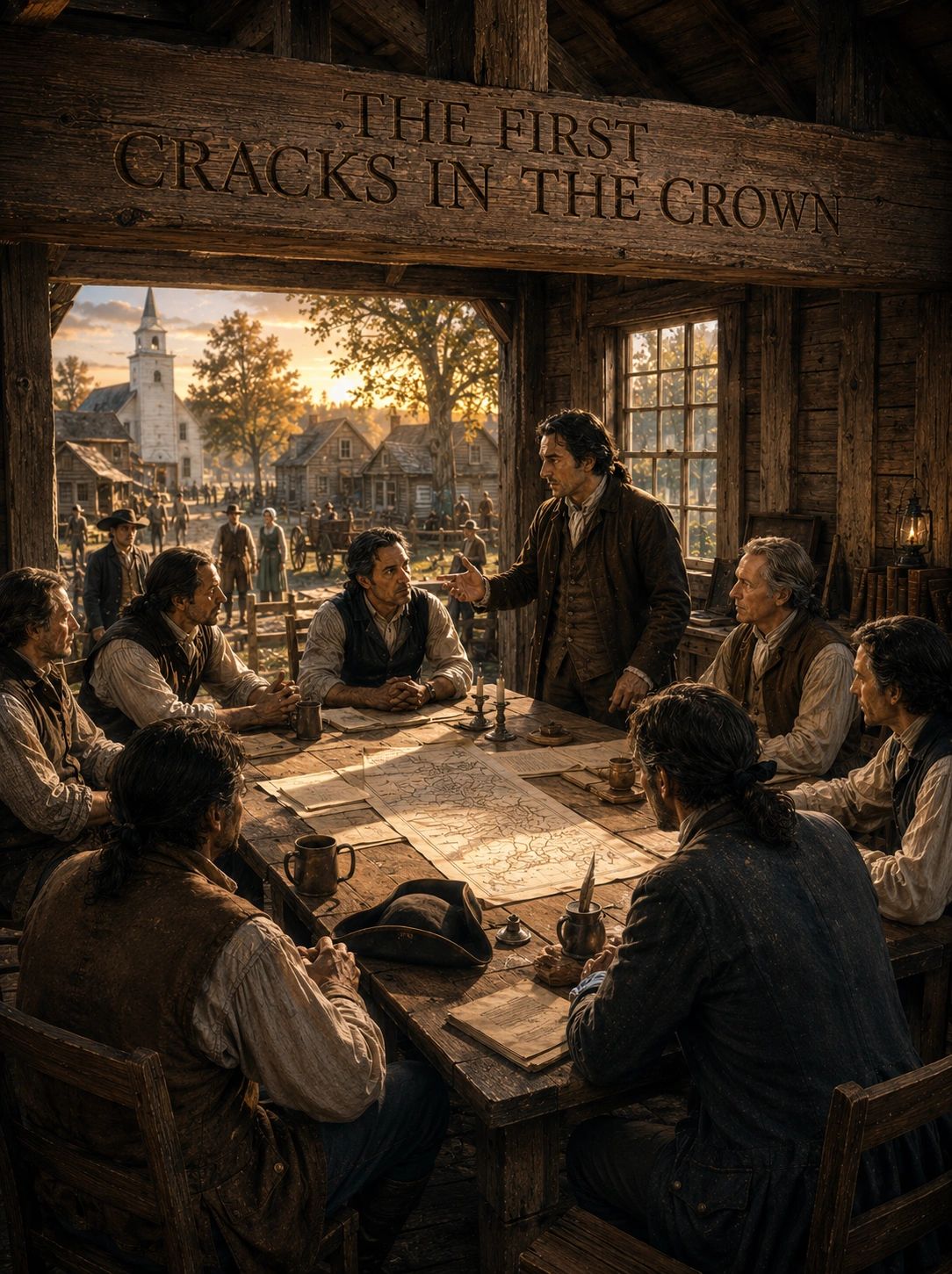
    It grows in ordinary rooms where people gather to decide what must be done. It grows when neighbors argue, listen, vote, compromise, disagree, and still return to the same community the next morning. It grows when people realize that public life is not someone else’s responsibility.

    In the colonies, these habits formed through practical necessity.

    Local assemblies, town meetings, church gatherings, courts, and committees gave people experience in making decisions together. They learned to debate needs, weigh consequences, raise money, enforce rules, organize defense, support public works, and speak for local interests.

    These actions may seem small compared with revolution, but they mattered deeply.

    A society becomes different when ordinary people practice responsibility. They begin to understand that liberty requires more than desire. It requires judgment. It requires patience. It requires knowledge of local conditions. It requires citizens willing to participate instead of merely complain.

    The colonies were still tied to Britain, but many colonists were already learning the muscles of self-government before they ever named the larger struggle.

    Human Nature And Generational Responsibility

    Human nature remains remarkably consistent across time.

    People want a voice in their own future. They want fairness. They want their labor to matter. They want to protect their families, shape their communities, and participate in decisions that affect their lives.

    Freedom and responsibility often grow together because one naturally calls for the other.

    Communities become stronger when individuals participate. Self-government is not simply a right handed down from above. It is a responsibility practiced from below. It lives in the habit of showing up, thinking carefully, speaking honestly, listening, weighing consequences, and caring what becomes of the future.

    Independence often begins quietly before it becomes history.

    Every generation inherits both freedom and responsibility. The colonists were not creating their world from nothing. They were building on what previous generations had endured, crossed, planted, repaired, and established.

    Many of the opportunities they enjoyed had been purchased by sacrifice they themselves did not make.

    That truth remains important in every age.

    Wisdom often comes through experience, hardship, and reflection. Older generations pass forward more than property or tradition. They pass perspective. They pass lessons about effort, danger, duty, gratitude, and the cost of neglect.

    Strong societies endure when people remember that what they enjoy today was often built by those who would never live long enough to fully enjoy it themselves.

    Freedom is never automatic.

    Self-government requires informed, responsible, and participating citizens. Societies weaken when people become disconnected from history, responsibility, and gratitude. They strengthen when people remember how slowly liberty grows and how carefully it must be protected.

    The first cracks in British authority did not begin with explosion.

    They began with distance, local responsibility, lived experience, and the growing belief that ordinary people should have a say in their own future. The colonists were still connected to England, but they were no longer thinking exactly like people who lived under the shadow of nearby authority.

    Their lives had changed.

    Their expectations had changed.

    Their sense of responsibility had changed.

    Soon those quiet changes would move closer to the foreground. Taxes, protest, representation, and authority would no longer remain distant concerns. The road toward revolution was beginning to show itself, not yet as open war, but as a question forming in the hearts and minds of ordinary people:

    Who has the right to decide the future of a people who have learned to govern much of life for themselves?

  • Different Worlds, One Future

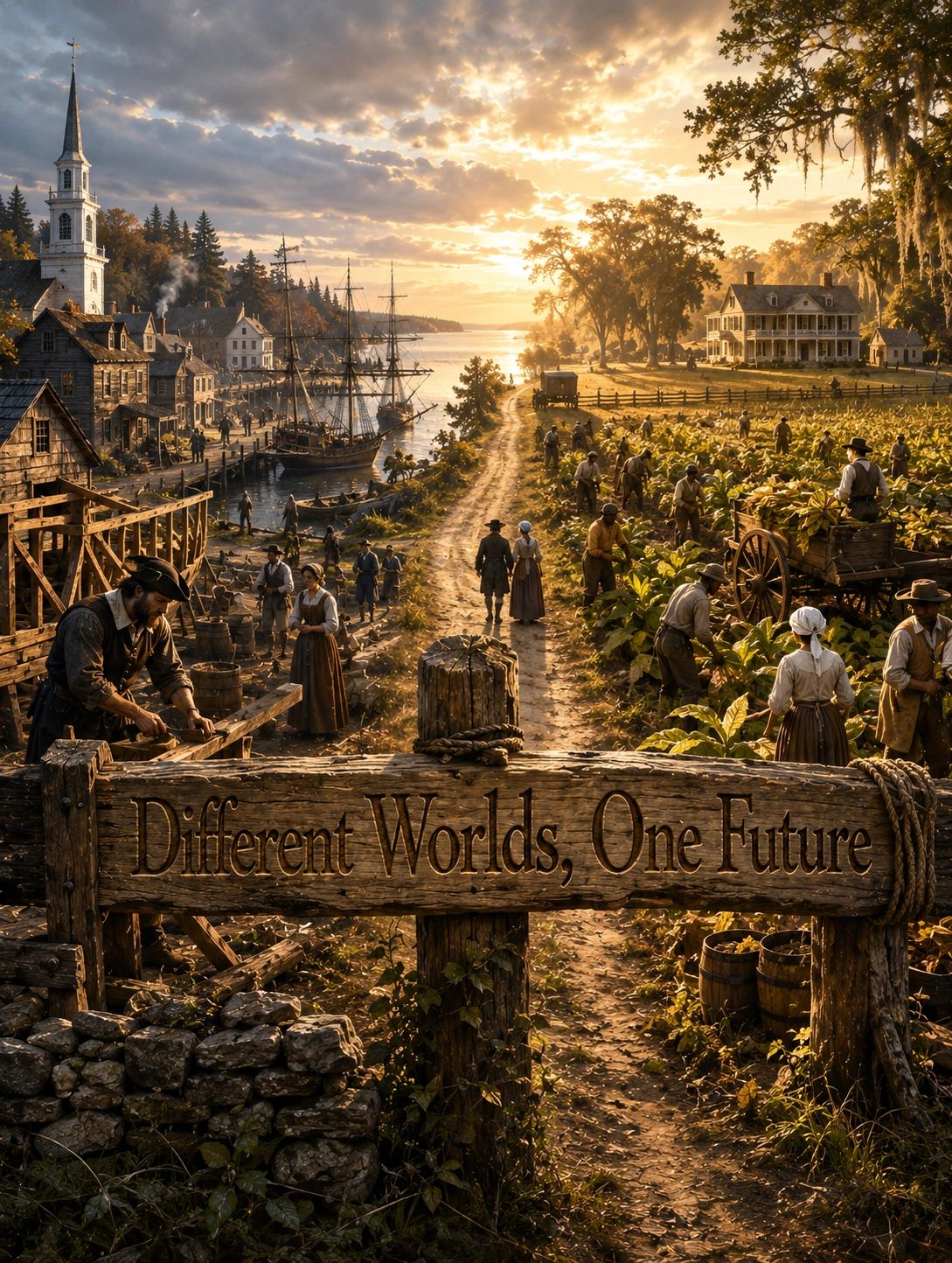
    The Colonies Begin To Grow

    As the first settlements became more stable, survival slowly began turning into community.

    What had once been rough shelters, uncertain food supplies, scattered families, and fragile beginnings started becoming something more permanent. Farms expanded. Ports grew busier. Small towns took shape. Trade developed. Roads, churches, meetinghouses, docks, mills, and markets began connecting people to one another in new ways.

    This did not happen quickly or easily.

    Every improvement required labor. Every cleared field, raised wall, planted crop, repaired boat, dug well, and shared tool represented human effort. But over time, people began to imagine futures beyond mere survival. Families could think about children, land, trade, worship, inheritance, education, and community life.

    The colonies were still small and vulnerable, but roots were beginning to hold.

    The Northern Colonies

    The northern colonies developed under difficult conditions.

    Harsh winters, rocky soil, shorter growing seasons, and coastal geography shaped the way people lived. Large-scale farming was harder in many places, so smaller farms, fishing, shipbuilding, trade, and town life became important. People learned to adapt to the land in practical ways.

    Religious belief also strongly shaped many northern communities.

    Churches and meetinghouses were not only places of worship. They were centers of order, teaching, discipline, and local identity. Life could be strict, demanding, and deeply communal. Neighbors watched one another because survival and social order were tied together.

    The northern colonies grew resilient because they had to.

    Cold weather, limited soil, dangerous seas, and hard work shaped a culture that often valued discipline, education, craftsmanship, trade, and local cooperation. Their world was not easy, but it was becoming distinct.

    The Southern Colonies

    The southern colonies developed differently.

    Warmer weather, longer growing seasons, wider stretches of land, and fertile soil encouraged agricultural economies. Tobacco and other cash crops became central to life in many areas. Land, labor, export, and plantation growth began shaping a society unlike the smaller town-centered patterns of much of the North.

    That difference carried serious consequences.

    Southern prosperity became tied to labor systems, including indentured servitude and, increasingly, the forced labor of enslaved Africans. To tell the story honestly, we cannot treat agricultural growth only as opportunity. It also contained the beginnings of deep moral contradiction and human suffering that would shape America for generations.

    The South’s climate and economy produced different lifestyles, priorities, and social structures.

    Wealth, land ownership, labor, and crop production became powerful forces. Some families pursued opportunity and independence, while others were trapped inside systems of exploitation and bondage. From the beginning, the American story carried both hope and contradiction.

    Different Lives, Different Priorities

    Geography shaped culture. Climate shaped work. Religion shaped laws and communities. Economic survival shaped identity.

    People adapting to the same continent did not all live the same way, think the same way, worship the same way, or build the same kind of communities.

    The northern merchant, the southern planter, the small farmer, the fisherman, the craftsman, the minister, the laborer, the servant, the enslaved person, the mother raising children on the edge of uncertainty, and the neighbor helping raise a roof were all part of the larger story.

    Their lives were not equal in power or freedom, and their experiences were not the same. But together, they reveal the complexity of early America.

    This matters because the colonies were not born as a finished nation with one clear identity.

    They were different worlds growing side by side. Some differences were practical. Some were religious. Some were economic. Some were moral. Some would later create strength. Others would create conflict.

    The Importance Of Community

    Even with their differences, the colonies shared one powerful need: community.

    Survival still required cooperation. Families needed neighbors. Farmers needed tools, labor, and markets. Sailors needed ports. Churches needed congregations. Children needed instruction. Towns needed meeting places. People needed somewhere to gather, worship, trade, settle disagreements, mourn losses, and make decisions.

    Community did not mean life was peaceful or fair for everyone.

    Human beings brought pride, fear, ambition, prejudice, generosity, faith, courage, selfishness, and hope with them. But communities gave people structure. They created habits of responsibility. They taught people to participate in local life.

    They helped ordinary people understand that the future depended not only on individual effort, but on shared duty.

    The colonies were slowly becoming places where local decisions mattered. Distance from Europe made daily self-reliance necessary. People could still be loyal to distant authorities, but they were also learning to solve problems close to home.

    The Beginning Of An American Identity

    In the beginning, many colonists still thought of themselves as English, Dutch, French, German, Scottish, Irish, African, or members of particular religious and cultural communities.

    Their loyalties, memories, languages, customs, and identities did not disappear when they crossed the ocean.

    But distance changes people.

    Hardship changes people.

    Responsibility changes people.

    Over time, life in the colonies began creating something new. People who lived an ocean away from Europe had to adapt to different land, different dangers, different opportunities, and different local needs. They still carried the Old World within them, but they were no longer living fully inside it.

    An American identity did not appear all at once.

    It grew slowly through work, conflict, worship, trade, family life, local government, hardship, and shared experience. It grew as people began to understand that their lives were being shaped by this place, this land, these communities, and these responsibilities.

    America has always contained different viewpoints, cultures, regions, priorities, hopes, and wounds.

    That began early.

    The colonies were not identical, and they were not simple. Unity did not require sameness then, and it does not require sameness now. Strong societies are built when people remember shared purpose while still telling the truth about difference, conflict, and human failure.

    Future generations inherit both the strengths and the mistakes of those who came before them.

    We inherit courage and contradiction, faith and blindness, sacrifice and injustice, community and division. Remembering honestly helps us become wiser stewards of what was handed forward.

    As the colonies grew, tension with the British Crown would slowly begin to emerge. Questions of freedom, taxation, authority, distance, loyalty, and self-governance would not arrive all at once. They would grow quietly beneath daily life, until citizens began asking whether they were merely distant subjects of an empire or something new beginning to form across the Atlantic.

  • Building A New Life

    Survival Became Daily Work

    After arrival, the dream of a new life quickly became the work of staying alive.

    The people who reached the New World could not simply rest in the relief of landfall. Shelter had to be built. Timber had to be cut. Food had to be found, grown, hunted, stored, or protected. Fresh water had to be secured. Fires had to be kept. Tools had to be repaired. Clothing had to be mended. Every day demanded labor.

    Survival was not an idea.

    It was a schedule.

    It was waking early, working through exhaustion, watching the sky, preparing for weather, guarding against hunger, and doing again tomorrow what had barely been finished today. The New World offered possibility, but possibility did not clear land, raise walls, dig wells, or feed families.

    Human hands had to do that.

    Hope had brought them across the ocean, but work would decide whether hope could become a life.

    Nothing Was Easy

    Nothing about the beginning was easy.

    Tools were primitive. Comfort was limited. Isolation could be frightening. Weather could change plans quickly. Disease could move through a settlement before people understood how to stop it. Food supplies could run low. A hard winter, a failed crop, a poor decision, or a moment of carelessness could carry serious consequences.

    It is easy to forget how much daily life once depended on practical judgment.

    A weak roof could mean misery. Poorly stored food could mean hunger. Unsafe water could mean sickness. A broken tool could slow the work of an entire family. A bad harvest could threaten a community.

    There were no large systems waiting nearby to solve every problem.

    Survival depended on preparation, effort, skill, humility, and the willingness to learn quickly from failure.

    That kind of life shaped people. It forced them to pay attention. It taught them that freedom was not the same as ease. Freedom gave them room to build, but it also placed responsibility directly into their hands.

    Families Became The Foundation

    Families became the first foundation of survival.

    Parents taught children what had to be known: how to gather, carry, mend, plant, cook, watch, listen, and help. Responsibility began early because life required it. Children learned not only through words, but by watching adults work. They saw fatigue. They saw sacrifice. They saw fear hidden behind courage. They saw that everyone had a part to play.

    A family was more than a private household.

    It was a working unit.

    Labor was shared because survival demanded shared effort. One person alone could do very little. Together, families could build shelter, prepare food, tend animals, clear ground, care for the sick, and protect one another against uncertainty.

    The lessons children learned were not abstract. They were lessons of necessity: work matters, preparation matters, patience matters, and people depend on one another.

    This is part of the inheritance modern readers should remember. Many freedoms later generations enjoy were built inside homes where people carried heavy responsibilities without expecting applause. The future was being shaped in small daily acts that rarely entered official history.

    Communities Began Forming

    As families worked to survive, communities began to form.

    Neighbors helped neighbors because isolation was dangerous. A barn could not easily be raised alone. A well could not always be dug alone. A harvest could fail if hands were too few. Tools, knowledge, labor, food, and protection were often shared because cooperation was not merely generous. It was practical.

    Churches and gathering places became more than buildings.

    They became centers of memory, worship, teaching, decision-making, comfort, and connection. In a hard world, people needed places where they could gather, pray, speak, mourn, plan, and remember that they were not alone.

    Community did not remove hardship, but it made hardship more bearable.

    Civilization began to appear slowly. A path became a road. A cabin became a home. A clearing became a farm. A meeting place became a church. A few families became a settlement.

    The work was not glamorous, but it was sacred in its own quiet way.

    Human beings were taking uncertainty and shaping it into belonging.

    Freedom Required Responsibility

    Freedom in the New World carried responsibility with it.

    There was no distant system coming to rescue every family from poor preparation, bad judgment, or unavoidable hardship. Survival depended on effort, adaptability, cooperation, and discipline. Independence and responsibility grew together because they had to.

    That is one of the great lessons of this period.

    Opportunity was real, but it came with hardship attached. A person could begin again, but beginning again required sacrifice. A family might have more room than it had known in the Old World, but room alone did not guarantee success.

    Land had to be worked.

    Shelter had to be built.

    Communities had to be defended, organized, repaired, and sustained.

    Freedom without responsibility becomes fragile. Responsibility without hope becomes burden. The early builders of life in the New World lived between the two.

    They were not perfect people, and their story was not simple, but they understood something modern comfort can hide: a future worth having must be built and protected by those who inherit the chance to build it.

    Ordinary People Built Extraordinary Things

    The land changed people.

    Hardship increased resilience. Practical knowledge became essential. Patience and endurance became daily virtues. Gratitude deepened when survival was not guaranteed. People learned the value of a warm fire, a sturdy wall, a good neighbor, a healthy child, a successful harvest, and one more day of life.

    Ordinary people built extraordinary things, though they may not have thought of them that way.

    They built roads, homes, farms, wells, towns, schools, churches, families, habits, and futures. They built the early foundations of civilization from timber, stone, soil, sweat, prayer, cooperation, grief, and hope.

    Much of what they built began small, but small things can carry the future when they are repeated faithfully over time.

    The beginning of America was not only in famous documents or famous names. It was also in hands hardened by work, in families learning to survive, in neighbors showing up for one another, and in communities forming where wilderness and uncertainty had stood before.

    Later generations often inherit systems they did not personally build.

    Roads, towns, homes, farms, churches, schools, laws, markets, and communities can feel permanent when we are born into them. But they are not permanent by accident. They survive because people build, repair, protect, and contribute.

    Appreciating the effort behind civilization creates gratitude.

    Gratitude creates responsibility.

    Strong communities require participation, not only consumption. A society weakens when people inherit comfort but forget the labor, sacrifice, cooperation, and self-discipline that made comfort possible.

    As settlements took shape, different regions began developing different identities, economies, habits, and cultures. Northern and southern communities would not grow in exactly the same way. Geography, climate, labor, trade, belief, and local necessity would begin shaping different worlds inside one future.

    Next, the story follows those differences as the roots of future American culture slowly emerge.

  • The New World

    Land At Last

    After weeks at sea, the first sight of shoreline must have felt almost impossible.

    Land meant relief. It meant the ocean had not swallowed them. It meant sickness, fear, storms, grief, darkness, and uncertainty had finally carried them somewhere. Exhaustion met hope as tired eyes looked toward shore.

    But reaching land did not mean the struggle was over. It meant a new struggle was about to begin.

    The people who stepped from boats onto unfamiliar ground were not walking into comfort. They were walking into work, danger, mystery, responsibility, and uncertainty. The dream that had carried them across the Atlantic now had to become daily life. Hope brought them there, but hope alone would not build shelter, find food, survive weather, or create a future.

    America Was Vast And Unknown

    To many who arrived from crowded towns and old European villages, the land before them must have seemed immense.

    There were deep forests, unfamiliar wildlife, wide rivers, strange sounds, harsh seasons, and a silence unlike the settled places they had left behind. Nature was larger, wilder, and more powerful than many had imagined.

    The New World did not simply welcome them. It confronted them with scale.

    A forest could be beautiful, but it could also hide danger, hunger, confusion, and isolation. A river could provide life, but it could also divide, flood, freeze, or carry people into the unknown. Land was opportunity, but it was also labor waiting to be done.

    The first sight of America may have lifted their hearts, but the first days on shore must have reminded them that survival would require everything they had.

    Not An Empty Land

    But this land was not empty.

    Indigenous peoples already lived here. They had communities, traditions, trade routes, languages, knowledge, spiritual beliefs, family structures, and histories of their own. The land that was new to European settlers was not new to everyone.

    To tell this story honestly, we must remember that history is human and complicated.

    Early encounters between settlers and Native peoples ranged from cooperation and trade to misunderstanding, fear, conflict, and loss. Some settlers depended on Native knowledge to survive. Some relationships brought exchange, assistance, and uneasy peace. Others became marked by mistrust, disease, pressure over land, violence, and grief.

    The story cannot be told truthfully if we pretend the land was untouched, waiting, or simple.

    The settlers entered a world already alive with human meaning. They brought hope, faith, ambition, fear, and need. Indigenous peoples carried their own homes, memories, responsibilities, and futures.

    From the beginning, the New World was not one simple story. It was many human stories meeting, helping, misunderstanding, colliding, and changing one another.

    Survival Began Immediately

    Survival did not wait.

    Shelter had to be found or built. Fresh water had to be secured. Food was uncertain. Weather could be harsh. Disease and isolation threatened families who had already endured so much. Every day required labor, judgment, patience, and cooperation.

    The dream of a new life quickly became the work of staying alive.

    People had to learn the land, read the seasons, protect one another, and make decisions with limited knowledge. A mistake could cost dearly. Too little food, poor shelter, contaminated water, sickness, conflict, or a hard winter could turn hope into fear very quickly.

    The New World offered possibility, but it did not remove hardship. It simply changed the form hardship took.

    Families Had To Become Builders

    The people who arrived had to become builders almost immediately.

    They built homes, farms, roads, wells, churches, fences, docks, and communities. They learned that survival depended on more than courage alone. It required cooperation, responsibility, skill, endurance, and neighbors willing to help one another.

    A future America did not appear all at once.

    It was built slowly, by human hands.

    Someone had to clear ground. Someone had to plant. Someone had to repair tools, carry water, raise walls, tend fires, protect children, care for the sick, bury the dead, and begin again after failure.

    The beginning of America was not only found in speeches, famous names, or founding documents. It was also found in ordinary labor repeated day after day by people trying to make life possible.

    The Meaning Of Opportunity Changed

    In the Old World, opportunity often meant escaping limits placed on a person by birth, class, conflict, or tradition. In the New World, opportunity meant something different.

    Freedom came with enormous responsibility.

    Survival depended on effort. There were few guarantees. The land could reward resilience, but it could also punish weakness, poor planning, isolation, and pride.

    Opportunity was real, but it was not easy.

    The people who came were not handed a finished civilization. They had to help create one. The freedom they sought did not remove duty. It increased it.

    If a family wanted a home, someone had to build it. If a community wanted order, people had to cooperate. If children were to inherit something better, parents had to sacrifice in ways those children might never fully understand.

    Human Beings Build Civilization Slowly

    Civilization is not built in a single moment.

    It grows when ordinary people clear ground, raise walls, plant crops, dig wells, share tools, bury loved ones, teach children, keep promises, worship, trade, forgive, defend, repair, and begin again after failure.

    Parents sacrificed for children. Neighbors depended on neighbors. Small settlements became the roots of future communities.

    This is where remembrance matters.

    The comforts later generations inherit did not appear by accident. They were built, protected, repaired, and handed forward.

    Gratitude deepens when we understand the cost.

    Civilization is fragile.

    Freedom has always required responsibility.

    The New World gave people a beginning, but not an easy one.

    It gave them land, but the land had to be understood. It gave them room, but room had to be shaped into homes, farms, and communities. It gave them possibility, but possibility demanded work, discipline, cooperation, humility, and endurance.

    That is still true.

    A better future does not build itself. It has to be accepted as a responsibility, not merely enjoyed as a gift.

    As settlements took shape, different regions began developing different identities, economies, habits, and cultures. The foundation of future America slowly began forming, not as one simple story, but as many human stories unfolding at once.

    Next, the story moves from arrival into the building of life itself, where survival, work, faith, conflict, cooperation, and responsibility would begin shaping the first roots of a future nation.