Malachite’s story weaves through some of the oldest chapters of human history.
Even its name reflects a connection to nature: the word “malachite” comes from ancient Greek molochitis lithos, meaning “mallow-green stone,” a nod to its rich green color reminiscent of mallow leaves en.wikipedia.org. This vibrant copper-based mineral, with its swirling bands of light and dark green, has long captivated people not just for its beauty but for the mystical qualities attributed to it across cultures.
Ancient Reverence: In ancient Egypt, malachite was treasured as both a cosmetic and a sacred stone. Archaeologists have found that Egyptians were mining malachite in the Sinai as early as 4000 BC crystalvaults.com. They ground it into powder to create the striking green eye paint worn by pharaohs and nobility – a cosmetic believed to enhance vision and perhaps even inner sight. Malachite was associated with Hathor – the Egyptian goddess of joy and motherhood – who was honored as the “Lady of Malachite,” patron of miners and the Sinai mines crystalvaults.com. Egyptians carved malachite into protective amulets (often engraving them with the sun or the Eye of Horus) to harness its power, believing the stone would guard the wearer in this life and the next loveandlightschool.com. Malachite even served as a pigment for painting sacred statues and walls. Its presence in tombs and temples suggests it was thought to carry divine blessings and protective energy.
From Rome to the Renaissance: Beyond Egypt, malachite fascinated other ancient civilizations. It was popular among the Greeks and Romans for jewelry and decor, appreciated for its vibrant hue and believed protective powers crystalvaults.com. Wealthy Romans wore malachite amulets, and in later eras, European mothers hung malachite beads around children’s necks to ward off misfortune. By the Middle Ages, the stone’s reputation as a guardian against evil had spread across Europe. Malachite was widely thought to fend off sorcery and the “Evil Eye” – curses or ill will caused by envious gazes crystalvaults.com. People claimed that malachite could even cure ailments or counteract poison, earning it a place in medieval medicinal lore crystalvaults.com. In some parts of Italy, malachite was fashioned into triangular amulets carved with eye-like patterns to reflect back the Evil Eye gemsociety.org. Parents would also hang malachite beads on cradles, believing they would keep evil spirits at bay and help infants sleep peacefully gemsociety.org. These beliefs highlight how malachite’s eye-like bands were seen as more than ornamental – they were perceived as active talismans of protection.
A Stone of Warnings and Wonders: Through folklore, malachite also gained a reputation as a stone of foresight and fortune. Traders in ancient times regarded malachite as a travel companion and business charm. In fact, merchants called malachite the “salesman’s stone” for its supposed ability to attract customers and profitable deals gemsociety.org. Perhaps most striking, malachite was said to warn its bearer of coming danger by physically breaking apart just before calamity struck gemsociety.org. This legend – also told of stones like turquoise – made malachite highly valued by travelers on long journeys and even by riders of tall camels in desert caravans (as protection against dangerous falls) gemsociety.org. While modern minds might smile at such tales, for centuries these stories gave malachite an almost guardian-angel status among gems.
Enduring Symbolism: Over time, malachite’s mystical allure never faded. Russian czars in the 18th and 19th centuries so admired malachite that they mined massive quantities from Siberia and the Urals, fashioning it into lavish decorations and even entire rooms in their palaces. (The famous Malachite Room in the Hermitage Museum is one dazzling example of malachite used on a grand scale, symbolizing wealth and protection crystalvaults.com.) Across cultures, malachite came to be associated with transformation, protection, and the vitality of nature’s green. Its very color symbolizes growth and rebirth, and its concentric “eye” patterns have been seen as watching over those who keep it near crystalvaults.com. From the ancient mines of Sinai to the jewelry workshops of the Renaissance, malachite earned its reputation as a gem that is not only beautiful but also deeply meaningful.
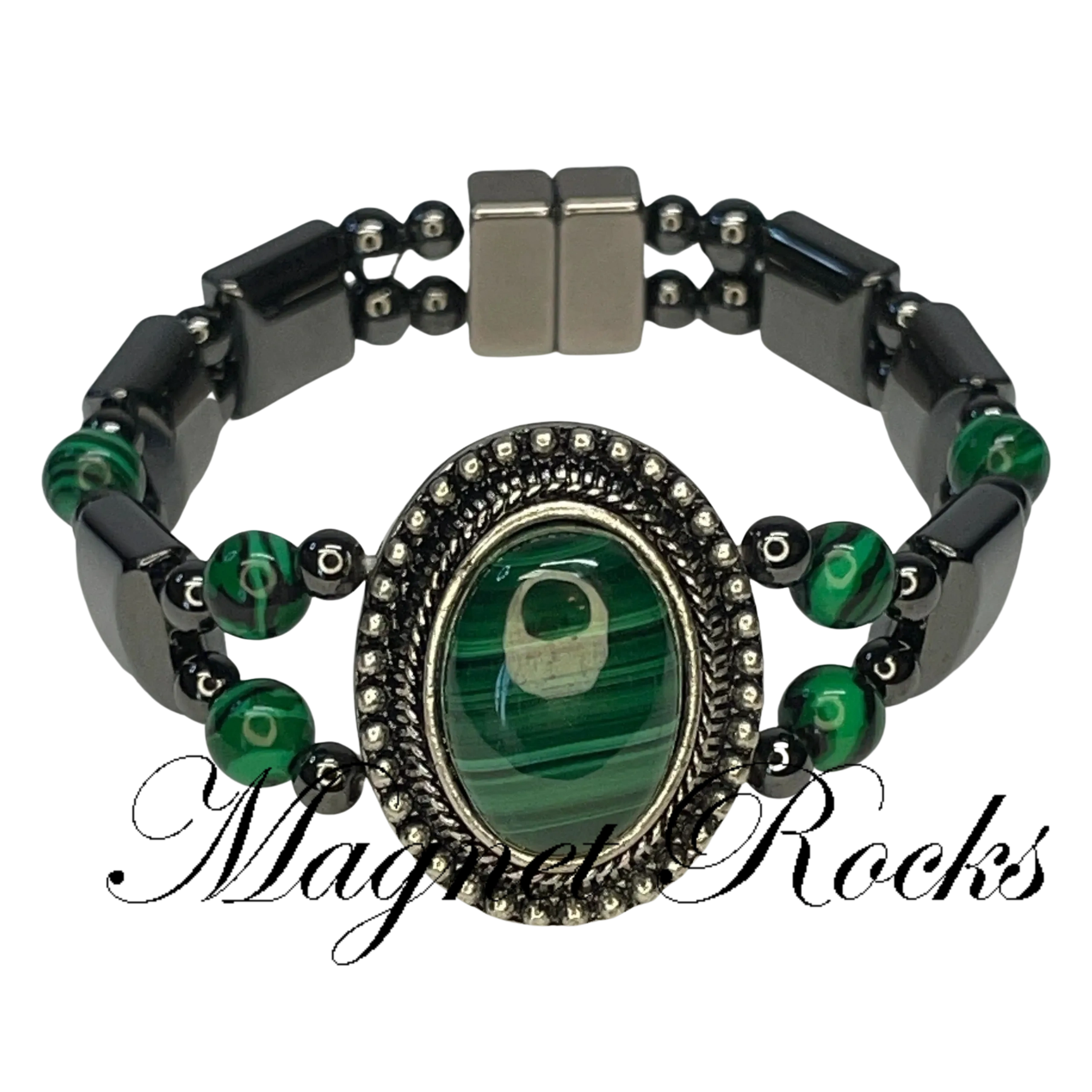
Today, we continue to be enchanted by malachite’s old-world mystique. The legends and symbolic meanings attached to this stone set the stage for understanding its metaphysical properties in modern crystal practices. Stay tuned for Day 2, where we explore Malachite’s metaphysical powers – from emotional healing and personal transformation to its role in chakra balancing and spiritual protection. If you’re intrigued by Malachite’s rich history and lore, you can also explore our collection of hand-crafted malachite pieces to keep a piece of this stone’s magic with you magnetrocks.net.
Magnet Rocks – Hematite Magnetic Jewelry | Daytona Beach, FL – Since 2012